REVIEW · SCUBA DIVING
Discover Scuba Diving in Mauritius
Book on Viator →Operated by Ocean Spirit Scuba Diving · Bookable on Viator
Learning scuba in Mauritius is weirdly simple. You start with a short theory session, then practice in shallow water, then you get a guided reef dive that feels like swimming through an aquarium.
I like how the 3-step structure removes the guesswork. You’re not thrown in at the deep end; you’re coached through mask and buoyancy skills first, then released to enjoy the ocean. I also like the small-group setup led by PADI-qualified instructors, including names like Bobby and Nando that come up again and again for patience and calm teaching.
One consideration: you need moderate physical fitness, and you’ll also want decent weather. If conditions are off, your experience may be rescheduled or refunded, because the activity depends on good conditions.
In This Review
- Key Takeaways Before You Go
- Why Mauritius Works So Well for First-Time Scuba
- Ocean Spirit Scuba Diving: Where the Experience Starts
- The 3 Learning Steps (DSD) in Real-World Terms
- Step 1: 20–30 Minutes of Theory You Can Actually Use
- Step 2: Confined Water Practice on the Beach (0.6–1.8m)
- Step 3: The Fun Reef Dive (6–12m for 30–45 Minutes)
- What You’ll See: Reef Life First, Big Animals If You’re Lucky
- How to maximize your odds of seeing bigger wildlife
- Instructor Ratio, Patience, and Comfort for Nervous First-Timers
- What that feels like on the day
- Price and Value: Is $116.15 Worth It?
- Timing, Fitness, and Who This Experience Suits Best
- Safety Reality Check: What to Trust, What to Ask
- Making the Most of Your Day: How to Set Yourself Up for Success
- Should You Book Discover Scuba Diving in Mauritius?
- FAQ
- Who is Discover Scuba Diving in Mauritius for?
- How long does the course last?
- What is the instructor-to-diver ratio?
- Do I get practice before going to the reef?
- How deep is the fun reef dive?
- How long will the reef dive be?
- Where does the activity start and end?
- What happens if weather is bad?
- What’s the maximum group size?
Key Takeaways Before You Go
- 3-step PADI Discover Scuba Diving flow: theory, shallow skill practice, then a reef fun dive
- Instructor support with a 1:4 ratio so you’re not left to figure it out alone
- Shallow water skills at 0.6–1.8m to build confidence fast
- Reef fun dive at 6–12m for 30–45 minutes based on air use
- Real odds of bigger sightings like dolphins and rays, if you dive at the right time
- Maximum 8 travelers, which keeps the experience controlled and personal
Why Mauritius Works So Well for First-Time Scuba
Mauritius is a strong choice for a first scuba experience because the program is built around gradual success. You begin in very manageable water depth, then move out to the reef once you’ve demonstrated the key basics. That sequence matters, because most first-timers aren’t scared of fish—they’re scared of doing something wrong underwater.
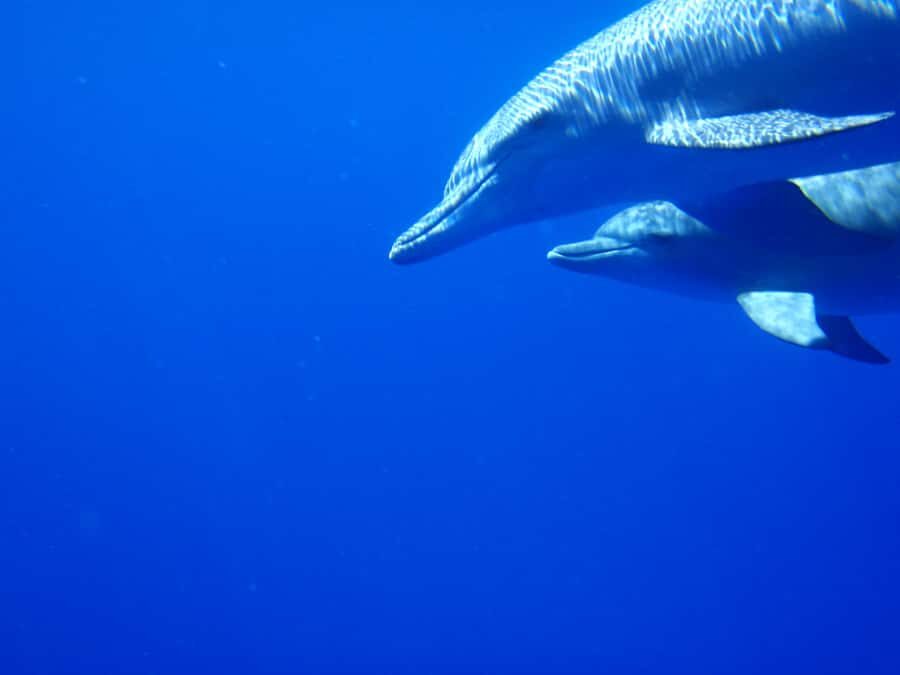
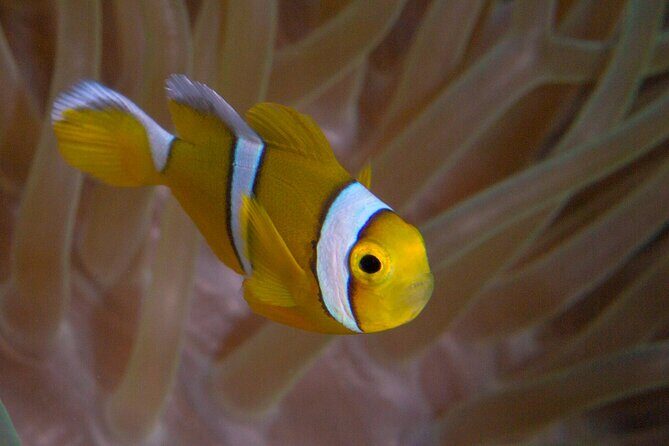
The reef focus is also a big deal. The goal here isn’t just checking a box. You’re guided out to see a large variety of reef life, with the chance of spotting larger pelagic creatures like dolphins and rays if timing and sea conditions line up. Even if you don’t see the big names, you’re still getting that “wow, I’m actually underwater” feeling from the mix of reef organisms and clear visibility.
And you don’t need experience to enjoy it. Beginners are welcome, and kids over 8 can join, as long as they meet the program’s practical requirements.
You can also read our reviews of more scuba diving tours in Mauritius
Ocean Spirit Scuba Diving: Where the Experience Starts
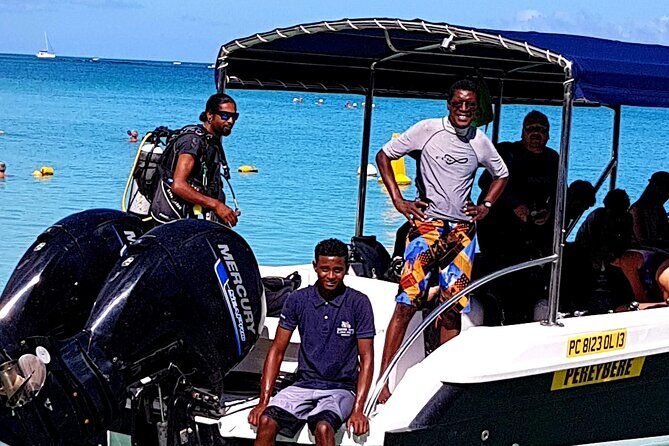
This DSD experience runs through Ocean Spirit Scuba Diving Mauritius. The meeting point is on Coastal Road in Grand Baie, at Ocean Spirit Scuba Diving Mauritius, Coastal Road Pereybere, Riviere du Rempart, Grand Baie, 30546.
Two practical reasons I think this matters:
- It’s geared for day-trip timing. The total duration is about 2 hours 30 minutes, which is short enough to fit into a beach day.
- It’s near public transportation, so you’re not locked into finding a private ride just to start learning.
You’ll meet up, get checked in, and then you’ll move through the course steps on-site and in the water. The ticket is mobile, which is one less thing to manage.
The 3 Learning Steps (DSD) in Real-World Terms
Discover Scuba Diving is built as a learning ladder. Think of it as training wheels that come off at the right moment—when you’ve proven you can handle the basics.
Step 1: 20–30 Minutes of Theory You Can Actually Use
You begin with a 20–30 minute theory session with a PADI qualified instructor. This isn’t a long lecture. It’s focused on what you’ll need immediately:
- How scuba gear works and how to handle it
- Safety basics and what to expect underwater
- Underwater sign language
- Skills you’re going to practice
- Why protecting the ocean environment matters
This last part isn’t just moral talk. It’s tied to how divers behave around reef life: you move with control, you don’t chase animals, and you respect the environment you’re visiting.
Step 2: Confined Water Practice on the Beach (0.6–1.8m)
Next is a first confined dive in shallow water between 0.6 and 1.8 meters, right by the beach. This part is where confidence is built.
You practice:
- Mask clearing
- Removing and recovering your mouthpiece
- Buoyancy exercises using the jacket and breathing
That sounds technical, but it’s actually the best part for first-timers. It helps you stop worrying about the gear and start focusing on breathing and staying calm. The shallow depth also keeps consequences low. If anything feels off, you’re still in a controlled zone with the instructor right there.
You’ll also get practice that prepares you for your next step, including how to communicate using underwater signals.




Step 3: The Fun Reef Dive (6–12m for 30–45 Minutes)
If the exercises are completed satisfactorily, you move on to the main attraction: a second dive for fun on the reef.
This dive is further out on the reef at a depth ranging from 6 to 12 meters, and it lasts about 30–45 minutes, depending on air consumption. The “no exercises” part is important. It means you can focus on looking around and enjoying the underwater world rather than completing drills.
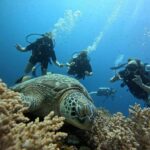
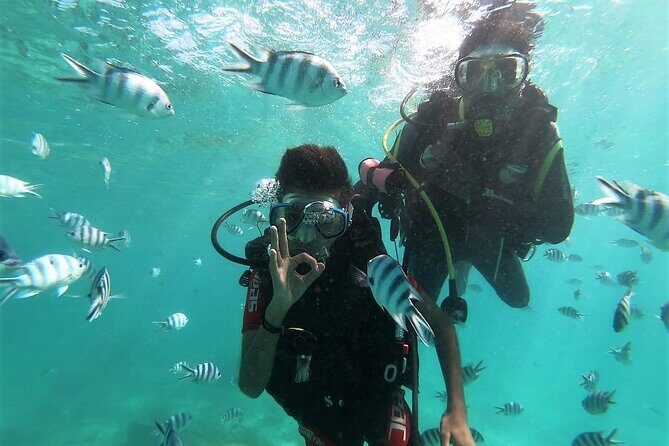
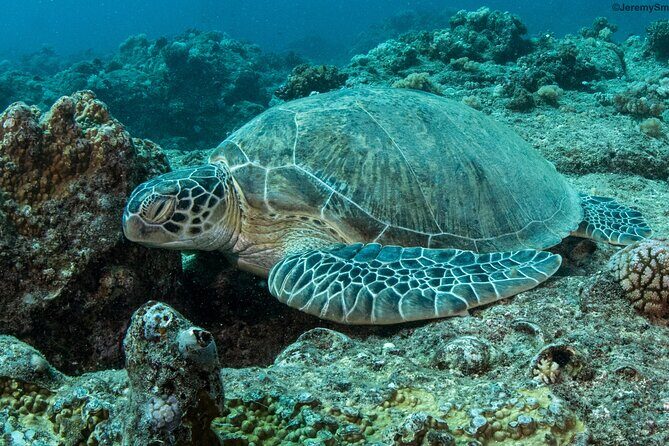
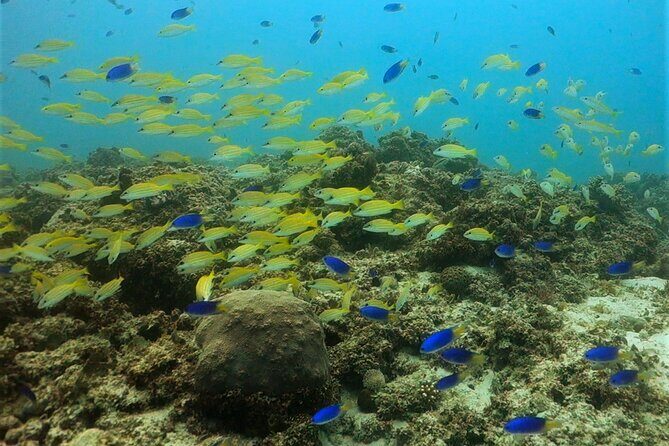
This is also where the experience can feel like you’re swimming in an aquarium. Reef life is front and center, and you have a shot at seeing dolphins, rays, and other larger pelagic creatures if conditions are right.
What You’ll See: Reef Life First, Big Animals If You’re Lucky
The program is designed around variety. You’re going to see reef life, and you’ll be guided toward spots worth lingering over. That guidance is underrated. If you show up without instruction, you might swim over the interesting stuff while staring at your own bubbles.
From the experience descriptions and the way instructors are described by divers, the best results come from letting your guide point out areas to explore and maintaining relaxed buoyancy. It’s not about racing to the next coral patch. It’s about hovering and watching for movement.
How to maximize your odds of seeing bigger wildlife
You can’t control wildlife, but you can improve your timing and energy:
- Dive at the right time for your itinerary. The program specifically notes that if you dive at the right time, you may see dolphins and rays.
- Keep breathing steady. That helps you stay calm and control your position in the water.
- Follow the guide’s directions rather than drifting off on your own.
If you do spot larger animals, don’t forget the real payoff: the reef dive is still your anchor. You’re not only chasing a rare sight—you’re getting the everyday underwater world, with a chance of surprises.
Instructor Ratio, Patience, and Comfort for Nervous First-Timers
This course is taught by PADI qualified instructors with an instructor-to-diver ratio of 1:4. In plain terms: you won’t be left alone with unfamiliar gear.
That structure matters because first-time anxiety is common, and it usually comes from not knowing what’s next. The DSD format reduces that fear by giving you a short plan for each stage. One moment you’re practicing in shallow water; the next moment you’re preparing for a guided reef dive.
The staff names you’ll hear most often in feedback include Bobby, Nando, and Roger. A clear theme in the way divers describe them is patience—especially for people who start nervous. Some divers specifically note extra attention for those who were more anxious, including one-on-one support at the instructor level.
What that feels like on the day
You should expect:
- A check of how you’re doing with the required exercises before moving on
- Calm explanations for gear use and underwater communication
- A guided approach on the reef so you’re not doing the “where do I look” problem alone
And because the group size is capped at 8 travelers, the whole operation stays manageable. You’re not one face in a crowd.
Price and Value: Is $116.15 Worth It?
At $116.15 per person, this is a paid learning experience, not just a sightseeing outing. So the real value question is: what do you get for that money?
You get:
- A structured DSD course with theory + confined practice + a fun reef dive
- Instruction from a PADI qualified guide
- A safety-focused learning format with a 1:4 instructor ratio
- A second dive that’s tied to your skill completion, depth planning (6–12m), and air consumption
You’re also buying time efficiency. At roughly 2 hours 30 minutes, you can try scuba without stealing an entire day from your Mauritius plans.
Finally, there’s a practical booking pattern: on average, people book about 20 days in advance. That suggests demand is steady, and it can be smart to reserve early—especially if you’re traveling as a family or around specific vacation dates.
Timing, Fitness, and Who This Experience Suits Best
This is a real scuba introduction, but it’s still a physical activity in open water. The key requirement in the provided details is moderate physical fitness.
That matters because:
- Even shallow practice demands controlled breathing and comfort in a gear setup
- The reef dive includes time underwater at depth, with duration driven by air consumption
- You’ll need enough mobility to manage mask and mouthpiece tasks safely during practice
Age-wise, children over 8 years old are welcome. Families do well with this format because the structure keeps expectations clear. Still, consider the child’s comfort level with water and learning new skills.
Also keep in mind that you should be ready for a plan that’s weather-dependent. The experience requires good weather, and if it can’t run due to conditions, you should expect a different date or a full refund.
Safety Reality Check: What to Trust, What to Ask
The program is clearly built around safety fundamentals: theory on safety and equipment, then step-by-step practice in shallow water before moving deeper. And the staff structure (PADI qualification, 1:4 ratio, limited group size, and required exercise completion) indicates a controlled approach.
One note: there is at least one written report of an out-of-oxygen incident during a DSD situation at around 12 meters, with a later response from the operator stating they could not find the event in their daily records and follow-up systems. That doesn’t automatically mean the incident was widespread or typical, but it does highlight something you can take seriously as a diver:
On your day, ask the instructor how they handle emergencies and equipment checks, and confirm what the monitoring process looks like. You don’t need to be alarmist—just make sure you understand the safety routine before you enter the water.
The big-picture takeaway: DSD is designed to keep you in the learning zone first. Your responsibility is to communicate honestly about comfort, breathing, and nervousness so the instructor can adjust support.
Making the Most of Your Day: How to Set Yourself Up for Success
You’ll be kitted out with scuba equipment by the staff, so you’re not managing gear purchases or rentals. That’s part of the value: you just show up and learn with proper gear and direct supervision.
Here are the things that will typically make your experience smoother, based on how instruction is described:
- Be honest about nervousness. The operator’s style includes patience, and some divers describe getting extra help when needed.
- Treat the shallow practice as your confidence builder, not as a chore. If you feel good in 0.6–1.8 meters, the reef dive is much more enjoyable.
- Use the underwater sign language you’re taught in the theory session. It’s there for a reason, and it keeps communication simple.
If you’re the type who needs certainty, remember that the course itself provides it. You know the sequence, the approximate depths, and the skill goals.
Should You Book Discover Scuba Diving in Mauritius?
I’d recommend booking if:
- You want a structured way to try scuba without jumping straight into open-water uncertainty
- You value small groups and hands-on instruction with a qualified team
- You’re excited about seeing reef life up close, with a chance at dolphins and rays
I’d be more cautious if:
- You’re dealing with limited physical comfort in water activities, since moderate fitness is mentioned
- You’re strongly dependent on a rigid schedule, because weather can affect whether the dive runs
- You or your group needs extra reassurance. In that case, do ask about one-on-one support and how they manage nerves before the day starts
Overall, this DSD experience offers solid value for first-timers: a safety ladder, clear instruction, and real time on the reef in a short window. If Mauritius is on your itinerary and you’ve ever wondered what scuba feels like, this is a practical way to find out.
FAQ
Who is Discover Scuba Diving in Mauritius for?
The experience welcomes beginners, and children over 8 years old can join.
How long does the course last?
It runs for about 2 hours 30 minutes (approx.).
What is the instructor-to-diver ratio?
The instruction is guided by a PADI qualified instructor with a ratio of 1:4.
Do I get practice before going to the reef?
Yes. You start with a 20–30 minute theory session, then a confined dive in the shallows between 0.6 and 1.8 meters for skills.
How deep is the fun reef dive?
If you complete the shallow exercises satisfactorily, you go on a reef dive at a depth of about 6 to 12 meters.
How long will the reef dive be?
The reef dive lasts about 30–45 minutes, depending on air consumption.
Where does the activity start and end?
It starts at Ocean Spirit Scuba Diving Mauritius on Coastal Road in Grand Baie (Pereybere area) and ends back at the meeting point.
What happens if weather is bad?
The experience requires good weather. If it’s canceled due to poor weather, you’ll be offered a different date or a full refund.
What’s the maximum group size?
There is a maximum of 8 travelers.