REVIEW · HIKING & TREKKING
Mauritius: Le Morne Mountain UNESCO Eco Hike
Book on GetYourGuide →Operated by Eco Explorers Mauritius Lmt · Bookable on GetYourGuide
Le Morne starts with a sunrise scramble. This 4-hour Mauritius hike up Le Morne Brabant turns scrambling into serious payoff, with sweeping lagoon views and a team that keeps you safe step-by-step.
I love the safety-first climbing instruction and the way the pace works for real people, not just fit athletes.
I also love the photo-and-story breaks, where you pause often and learn about local plants, animals, and conservation while you catch big panoramas. The main drawback is it’s not a casual walk: there are four technical climb/scramble sections, so if you have vertigo, heart issues, or back problems, this is likely a no-go.
In This Review
- Key points before you go
- Le Morne Brabant: why this hike feels special in Mauritius
- Getting there: pickup window and the private-estate start
- The warming trail: how the hike ramps up without rushing you
- Scrambling sections near 340 m: where technique matters
- Rest points, photos, and the storytelling you actually remember
- Summit time: the big view from the V-shaped crest
- Why sunrise timing changes everything for value
- What this hike is really like for different bodies
- Price: what you’re paying for at $82 per person
- Who should book this and who should skip it
- Should you book Le Morne with this team?
- FAQ
- How long is the Le Morne Mountain eco hike?
- Where do I meet the group?
- Is there scrambling or climbing involved?
- What should I bring?
- Is food and drink included?
- What language is the guide?
Key points before you go
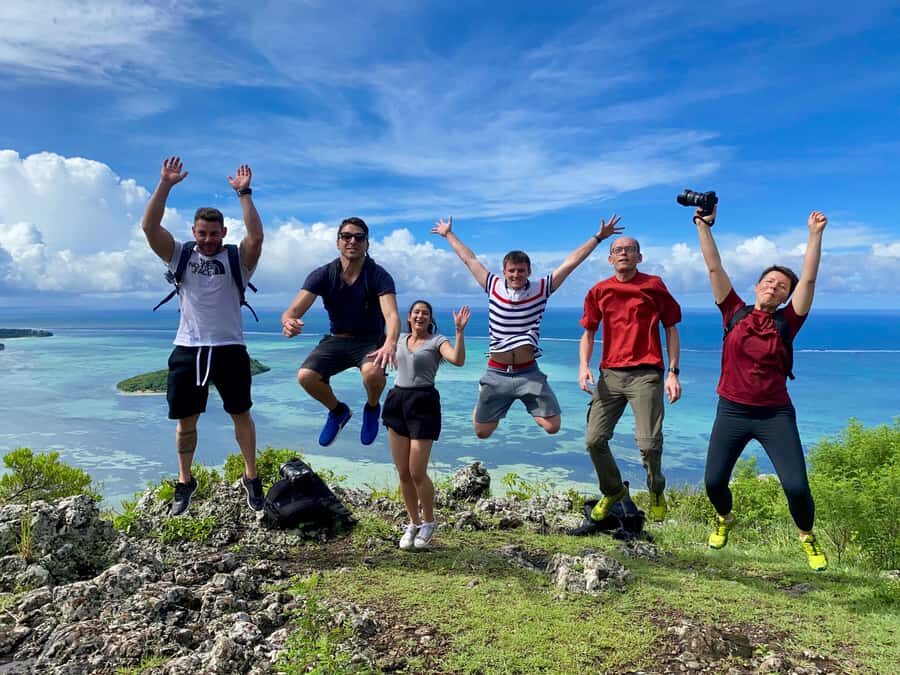
- A true scramble climb, not just a hike: four climbing sections (70 m, 25 m, 15 m, 12 m) near the top.
- Sunrise timing pays off: you’re up early for cooler conditions and the best light over the lagoons.
- Bryn James runs the experience with tight safety focus: clear technique coaching and constant watchfulness.
- Wildlife before the first step: Rusa deer, wild pigs, and birds like peacock and pheasant show up on the private estate drive-in.
- Photos are a big part of the value: the guide provides photographs, and many guests highlight the extra video/photo deliverables afterward.
- It’s weather-dependent: bad weather can postpone the hike with no extra cost.
Le Morne Brabant: why this hike feels special in Mauritius
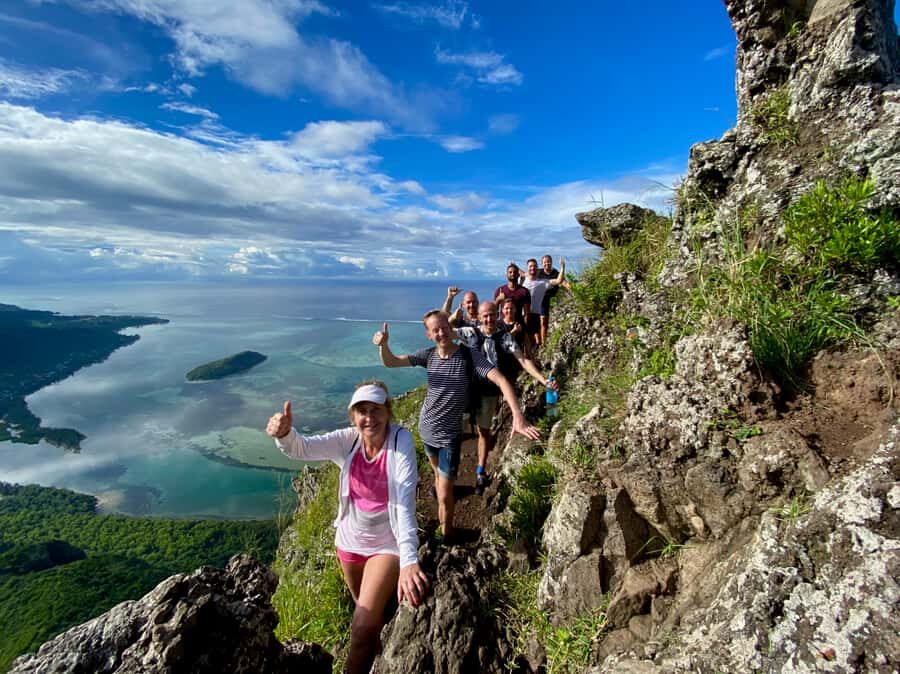
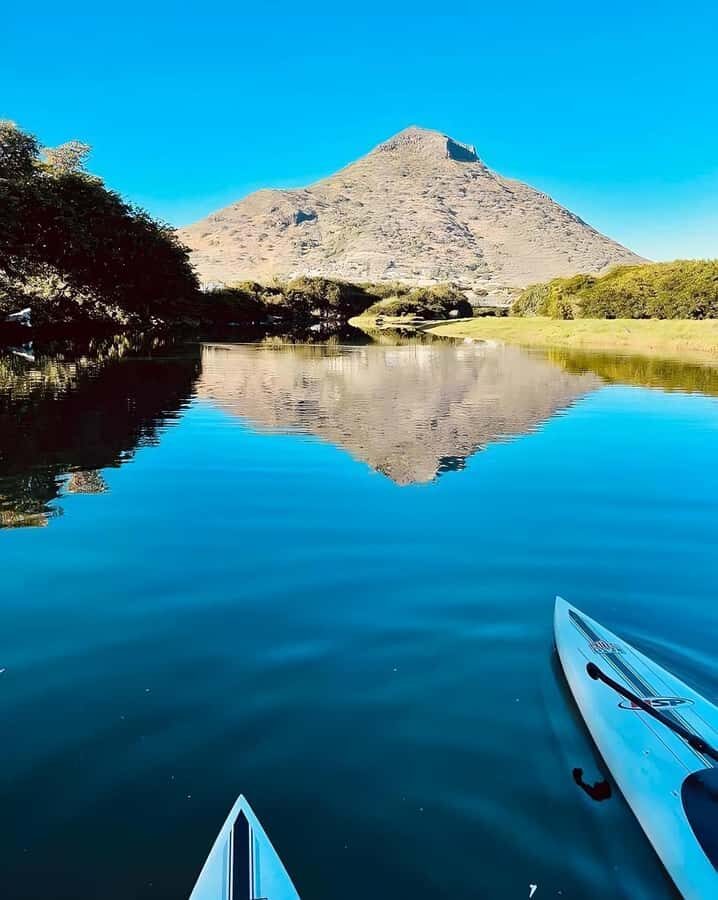
Le Morne Mountain is one of those places where the scenery looks like it belongs on a postcard, but the real magic is how you earn it. You start low, you climb in sections, and when the view opens up you realize you’ve been moving through a protected, living slice of Mauritius, not just hiking scenery for scenery’s sake.
What makes this specific experience stand out is the mix of effort and education. You’re not only focused on where to put your feet. You’re also learning what’s around you: the local ecology, the mountain setting, and the conservation mindset that keeps this area from becoming just another tourist checkbox.
One note to keep you grounded: yes, the summit is the star. But the climb is the show too. The near-top scrambling sections mean you should plan on using hands, feeling your way, and staying mentally calm when the rock gets steep. If you want a simple footpath only, you’ll probably be happier with another Mauritius walk.
You can also read our reviews of more hiking tours in Mauritius
Getting there: pickup window and the private-estate start
Your day begins at Explorers Mauritius, on Route Cotière, Le Morne Brabant 91202. If you’re staying within the Le Morne Peninsula pickup area, the team can collect you from a pinned Google meeting point. If not, you go straight to Explorers Mauritius.
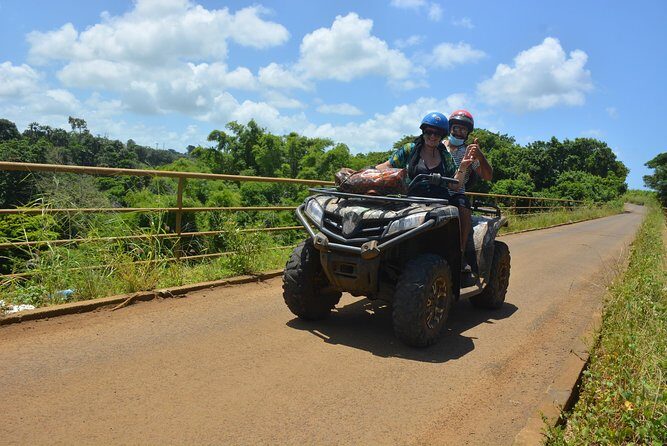
Either way, the first big surprise is how the morning starts on wheels, not shoes. You’ll travel in a 4WD vehicle through a private estate before you begin hiking. That drive-in is part of the story.
Along the way, you can expect wildlife viewing on the estate: Rusa deer and wild pigs, plus birds such as peacock, pheasant, quail, and guinea-fowl. This matters because it shifts the mood of the hike. Instead of walking into a view with zero context, you arrive already noticing how much life is happening right where you’ll climb.
Practically, it also gets your body ready. After a short start briefing, you’re already moving, already warming up, and you haven’t burned energy on the drive portion that often feels like dead time on other excursions.
The warming trail: how the hike ramps up without rushing you
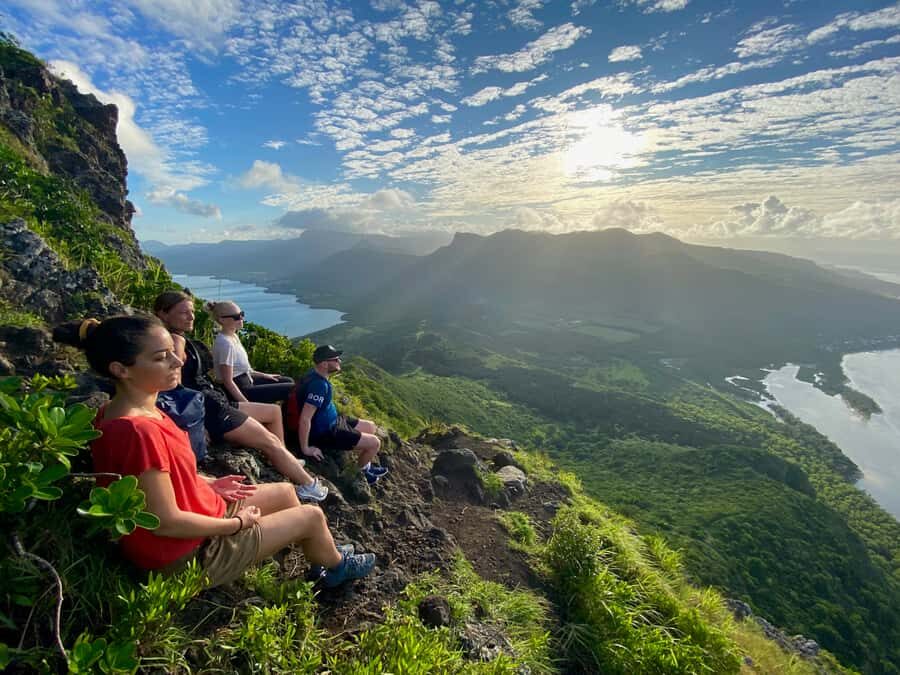
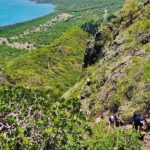
Once you start on foot, you follow the north-western base of Le Morne. The route begins with an undulating path built to do two jobs: raise your heart rate gradually and get your legs used to uneven ground before the technical climbing.
You’ll also get early perspective without needing to reach the summit. There are points where you can appreciate the mountain from both the north-western and south-eastern flanks, meaning you see how the mass of Le Morne changes as your viewing angle changes.
This is one of the smartest ways to design a hike for mixed fitness levels. Reviews consistently mention that the guide manages the group so the slowest hikers aren’t left behind and the faster ones don’t sprint ahead. The key isn’t just kindness. It’s technique. When you know the plan for when scrambling begins, your brain stops panicking and starts cooperating.
Scrambling sections near 340 m: where technique matters
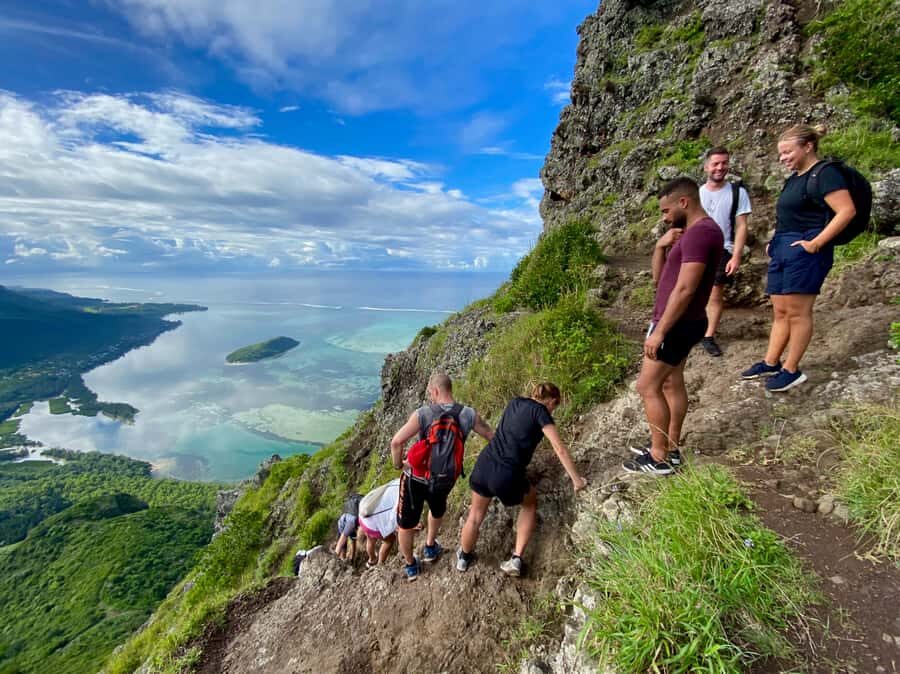
At about 340 meters above sea level, you’ll stop for a safety and mountain security briefing before the main climbing portions. This is the moment where the experience stops being a hike-and-done and becomes a coached climb.
Then come the four scramble/climb sections:
- 70 m
- 25 m
- 15 m
- 12 m
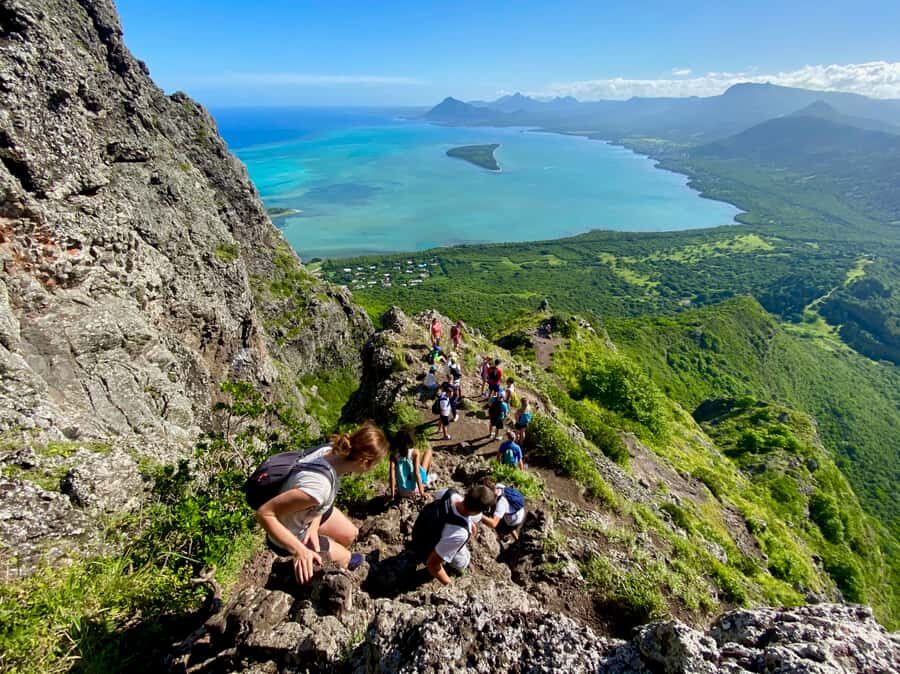
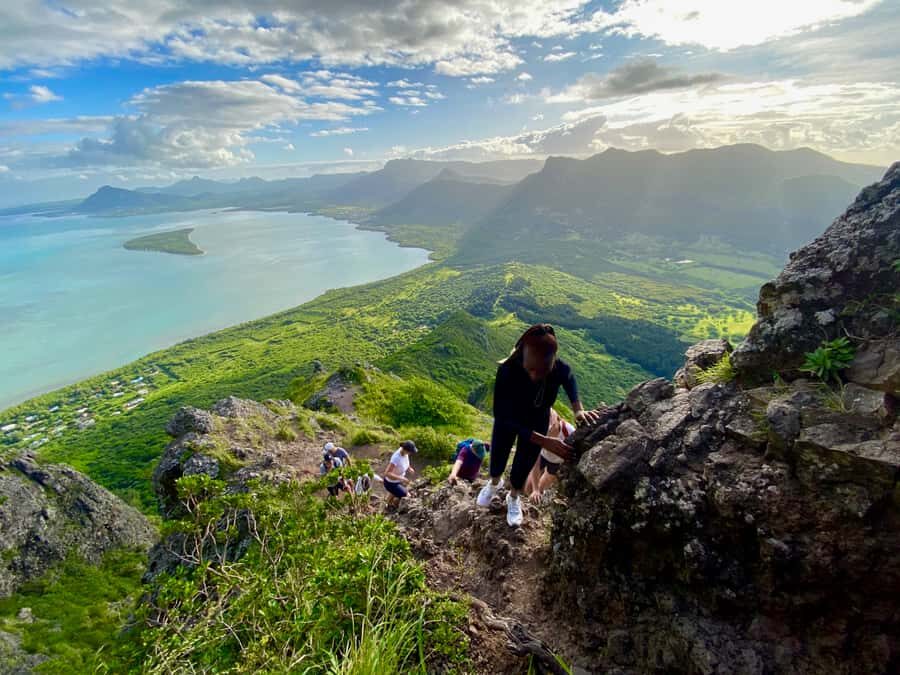
You should picture this as steep, rocky terrain where you may need to use your hands and trust your footing. There’s no shame in moving slowly here. The point is control.
The guide’s job is to help you do exactly that. Many guests specifically highlight coaching tips like how to climb more easily and how to handle the short technical parts without fear taking over. You’re not left to figure it out yourself.
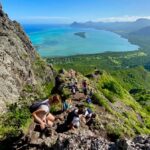
You’ll also start seeing the payoff windows that make the effort feel worth it. During these sections, the view opens toward the lush mountain ranges of Chamarel and toward the lagoon views of both coasts, stretched out to the horizon.
If you’re wondering whether this is scary: it can feel exposed near the steep parts, especially if you’re sensitive to heights. That’s why vertigo and some mobility or back conditions are listed as not suitable.
Rest points, photos, and the storytelling you actually remember
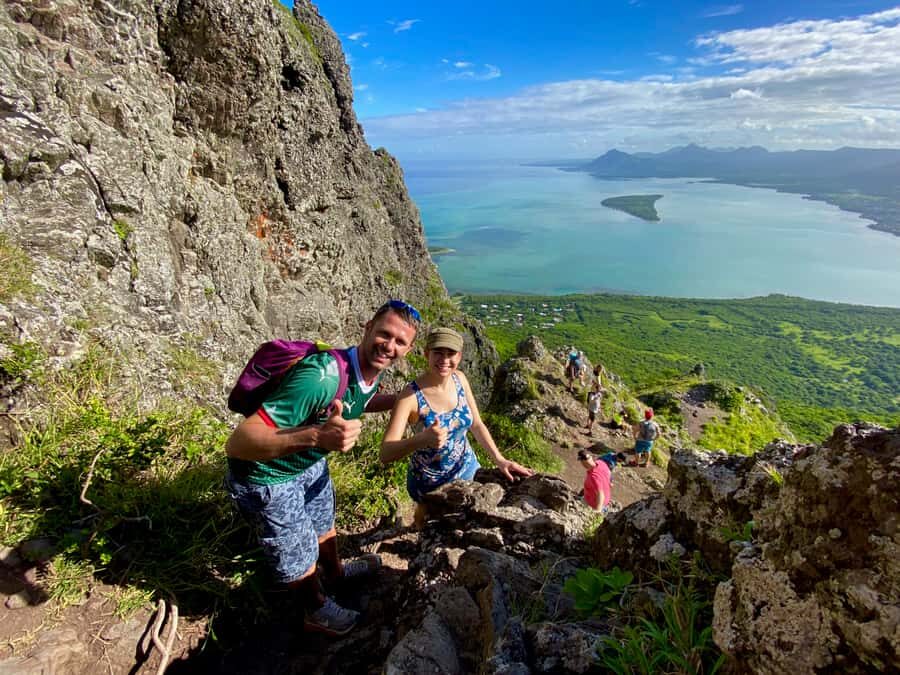
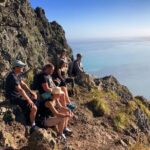
This tour builds in rest points, and they’re not random. They’re timed with both views and learning moments. The team takes photos at multiple stops, which is a big deal because you’re often busy concentrating on the next move when the best light hits.
More importantly, these pauses help you understand what you’re looking at. Between photo stops, you’ll hear historical, botanical, and conservation-related information. The goal isn’t trivia for its own sake. It’s turning the view into something you can describe later, when you’re back on the beach and thinking about what made the morning different.
A practical plus: rest points also help manage energy. If you start strong but don’t pace yourself, steep scrambling gets harder fast. Frequent breaks keep you from turning “challenging” into “uncomfortable.”
One detail that keeps showing up in feedback: people love that Bryn James captures the group carefully and shares professional photographs and videos afterward. For many travelers, that’s what turns the climb into a lasting memory instead of a sweaty blur.
Summit time: the big view from the V-shaped crest
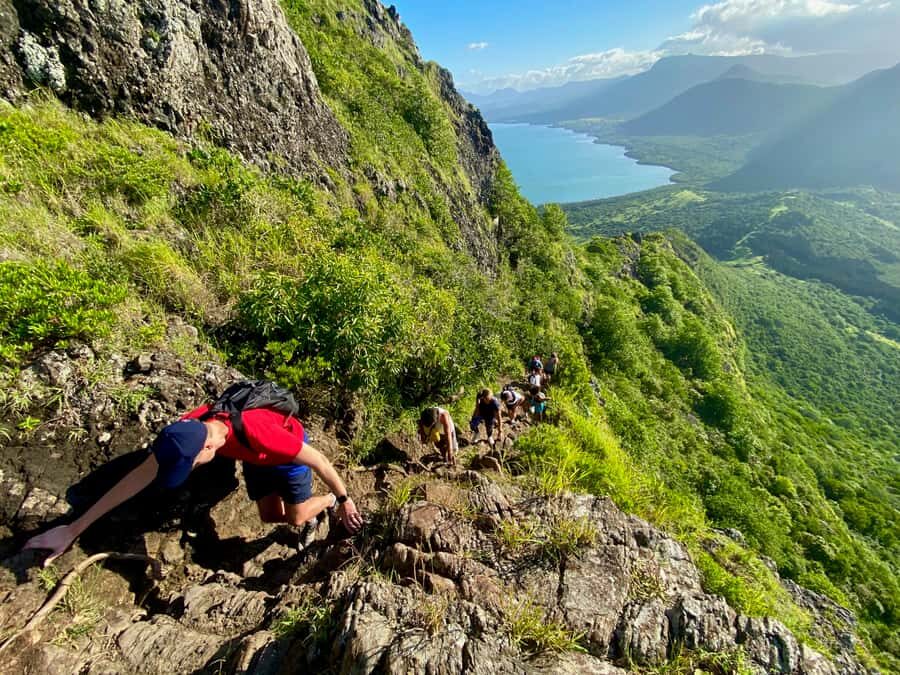
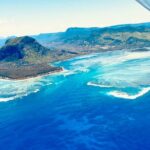
When you reach the summit area known as a V, you get your just reward: major lagoon views and a location that feels bigger than the effort that got you there. This is where you appreciate why Le Morne is protected enough to be a UNESCO-listed site in the first place: the setting is dramatic, and it changes depending on your angle and the morning light.
You’ll also get additional information from the team during summit time, plus a chance to break and take in the surroundings. The experience includes a break time and a breakfast/picnic-style moment with some free time mixed in. That matters because you’re not just passing through the summit like a checkpoint. You’re meant to pause there long enough to let the view land.
Then comes the descent. Don’t underestimate it. Even when ascending is harder mentally, descending can be tougher on knees and balance because you’re controlling your weight on steep, uneven rock. The team stays watchful through the downhill, which is exactly what you want when fatigue starts to creep in.
Why sunrise timing changes everything for value
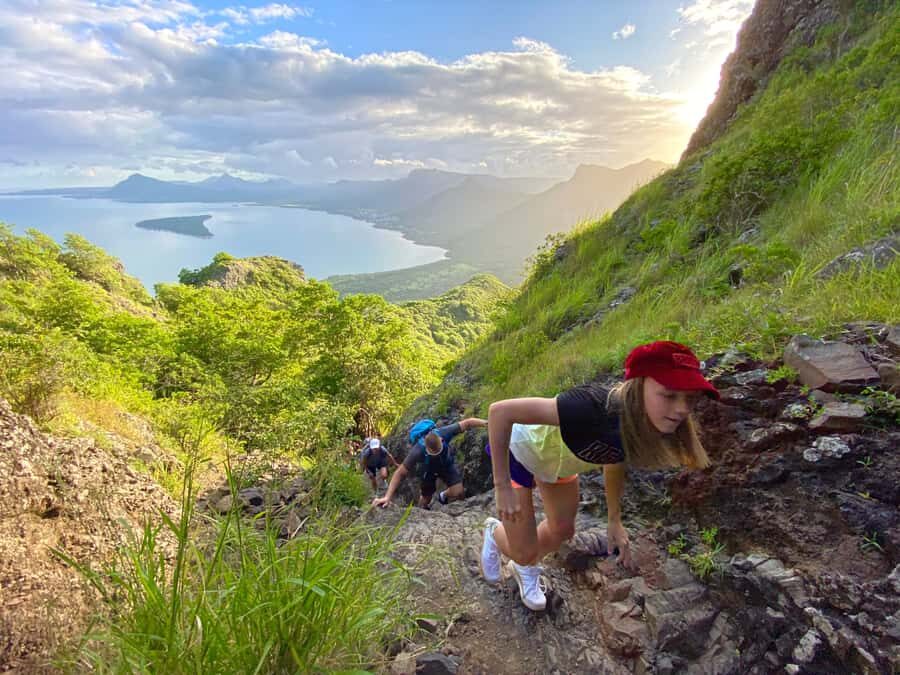
This is marketed as an eco adventure, but the real advantage is practical: you start early enough to catch sunrise and beat heat. Reviews repeatedly mention the early wake-up as worth it, especially because later in the day temperatures can rise quickly.
From your point of view, sunrise changes three things:
- The climb feels less punishing under cooler conditions.
- Shadows help you see footing and texture on rock.
- The lagoon colors shift dramatically in morning light, so the photos look better too.
And when you add in the guide’s safety emphasis, the early start becomes part of the value, not just an inconvenience. You’re not spending 4 hours outdoors at the worst time of day. You’re stacking the best conditions with the technical parts that need focus.
What this hike is really like for different bodies
This tour isn’t listed as suitable for everyone. The not-suitable list includes:
- back problems
- mobility impairments
- heart problems
- vertigo
- diabetes
- recent surgeries
There are also safety notes before you go:
- You must bring your bronchial inhaler if you’re susceptible to asthma.
- If you have diabetes, you’re told to monitor sugar levels and carry medication.
- If you’re in early pregnancy or have undergone corrective surgery to your knees or spine, you should advise the local partner.
- The hike may be postponed due to bad weather at no additional cost.
That combination reads like: the operator takes health seriously, but the technical terrain is the limiting factor. If you’re unsure, I’d treat the not-suitable list as a warning sign, not a suggestion. And if you have conditions that don’t usually affect you on flat walks, remember that scrambling changes everything.
Also, bring the right footwear. Comfortable shoes only. Sandals or flip-flops are not allowed.
If you’re a first-time hiker, this can still work, but only if you listen and move carefully. The guide’s coaching style is repeatedly praised as confidence-building, and guests mention feeling comfortable and secure even on the more exposed sections.
Price: what you’re paying for at $82 per person
$82 for a 4-hour guided climb might sound steep until you break down what’s included.
You’re paying for:
- A professional mountain and river guide with long experience
- Comprehensive insurance coverage
- Photographs as part of the experience
- A team that handles safety briefings, pacing, and technical climbing coaching
- Vehicle transport in a 4WD, plus the private estate access portion of the day
Then there’s the part that’s harder to price: sunrise timing, scrambling instruction, and the way the group gets managed on uneven terrain. A hike like this doesn’t function well without the right guide. You’re not just buying a view. You’re buying reduced risk and a smoother climb.
Food and drink are listed as not included, even though there are break moments like breakfast/picnic-style time built into the schedule. So I’d still bring a small snack plan for yourself and expect that you may want extra water. If you’re sensitive to low energy, don’t gamble on only what’s provided during breaks.
Who should book this and who should skip it
This is a great match if you want:
- A technical but coached climb, with hands-on scrambling
- Big lagoon views without spending all day on a long trek
- A sunrise start that makes the morning cooler and the light better
- A guide who explains the biology and conservation side while you hike
- Photos and video-style keepsakes after the climb
You might skip it if you:
- Want a flat, easy nature walk
- Have vertigo, heart issues, back problems, or mobility limitations
- Are recovering from recent surgery
- Don’t want to use your hands on rock or don’t want steep, uneven descent
Should you book Le Morne with this team?
If you’re the type of traveler who likes being active but also likes feeling safe and looked after, I think this is an excellent booking choice. The best reason is simple: the climb is technical, and the guide system here is built around coaching, briefings, and careful pacing, not just leading you up a mountain.
If you’re healthy enough to handle scrambling and you’re comfortable starting very early, you’ll likely come away with two things people talk about long after Mauritius: a summit view that looks unreal and photos that prove you were there, even on the steep parts.
If you’re on the fence because of fitness fears, the guidance style from Bryn James is repeatedly described as confidence-building. And if weather is rough, the hike can be postponed without added cost, so you aren’t trapped with a bad-day gamble.
FAQ
How long is the Le Morne Mountain eco hike?
It’s about 4 hours.
Where do I meet the group?
Collection is only available in the Le Morne Peninsula. If you’re not collected, meet at Explorers Mauritius, Route Cotiere, Le Morne Brabant 91202, Mauritius.
Is there scrambling or climbing involved?
Yes. There are four scramble/climb sections: 70 meters, 25 meters, 15 meters, and 12 meters, with safety briefing before the first technical section.
What should I bring?
Wear comfortable shoes. Sandals or flip-flops are not allowed. If you have asthma, bring your bronchial inhaler. If you have diabetes, monitor sugar levels and carry your medication.
Is food and drink included?
Food or drink is listed as not included.
What language is the guide?
The instruction is in English.