REVIEW · CHAMAREL
Chamarel: Sunset Mountain Hike
Book on GetYourGuide →Operated by Horazis · Bookable on GetYourGuide
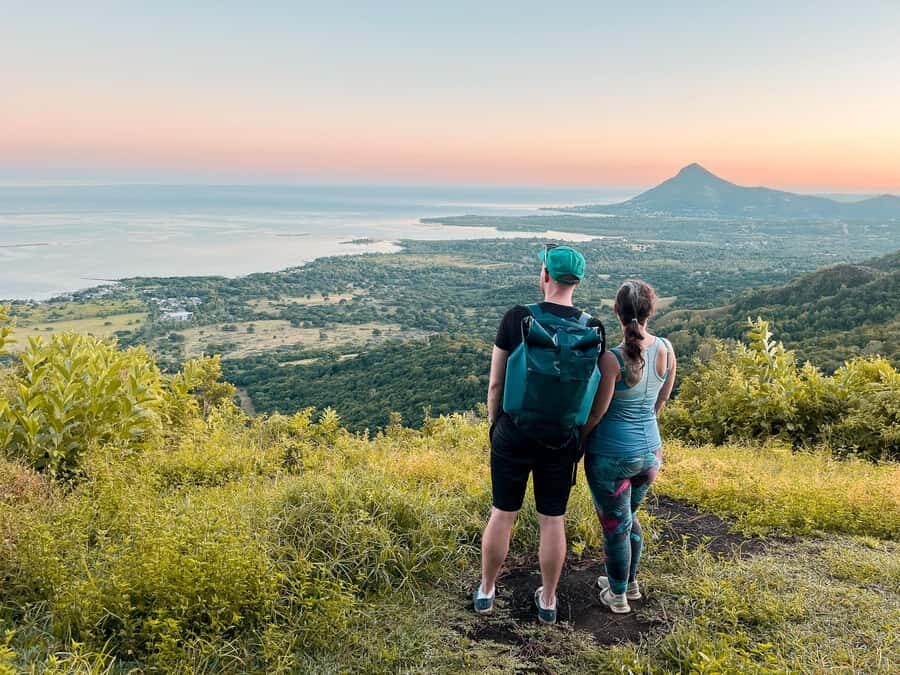
Golden light climbs uphill. That’s the trick with Chamarel: you’re moving from forest shade toward an ocean view while the sky changes color in real time. I especially like the clear sunrise/sunset focus—you’re not hiking “sometime today,” you’re hiking for a specific moment of light. And I also love that the guide doesn’t treat it like just a workout; you get practical talk on Mauritian geology, culture, and the local ecosystem while you walk.
The main thing to consider is that this is a real mountain climb. If you’re not steady on your feet or you get nervous with heights, this one can feel like hard work instead of calm scenic time.
In This Review
- Key highlights to know before you go
- Chamarel at golden hour: what a 3-hour summit hike really feels like
- Meeting your mountain guide: facts, safety, and real nature talk
- Sunrise vs sunset: how to choose your light (and how it changes the hike)
- Sunrise hike: crisp air and a headlamp start
- Sunset hike: late-afternoon energy and fading warmth
- Quick decision tip
- The climb itself: forest shade, bird melodies, and ocean views
- Why the summit moment matters: reflection, photos, and color layers
- What’s included, and what you should bring (so the 3 hours feel easy)
- Price and value: is $69 worth it?
- Who this hike suits best (and who should skip it)
- Practical timing and weather reality (without killing your plans)
- Should you book Chamarel Sunset Mountain Hike?
- FAQ
- How long is the Chamarel hike?
- Does this hike run for both sunrise and sunset?
- What language is the guide?
- What’s included in the price?
- What should I bring?
- Is transportation from my hotel included?
Key highlights to know before you go
- Sunrise or sunset timing: the hike is set up so you reach the summit for the sky show
- Kevin’s guiding style: friendly, safety-first mountain guidance with lots of nature explanation
- Headlamp + cereal bar: small comforts that help you start strong (especially for sunrise)
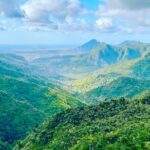
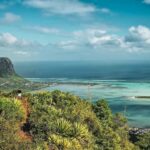
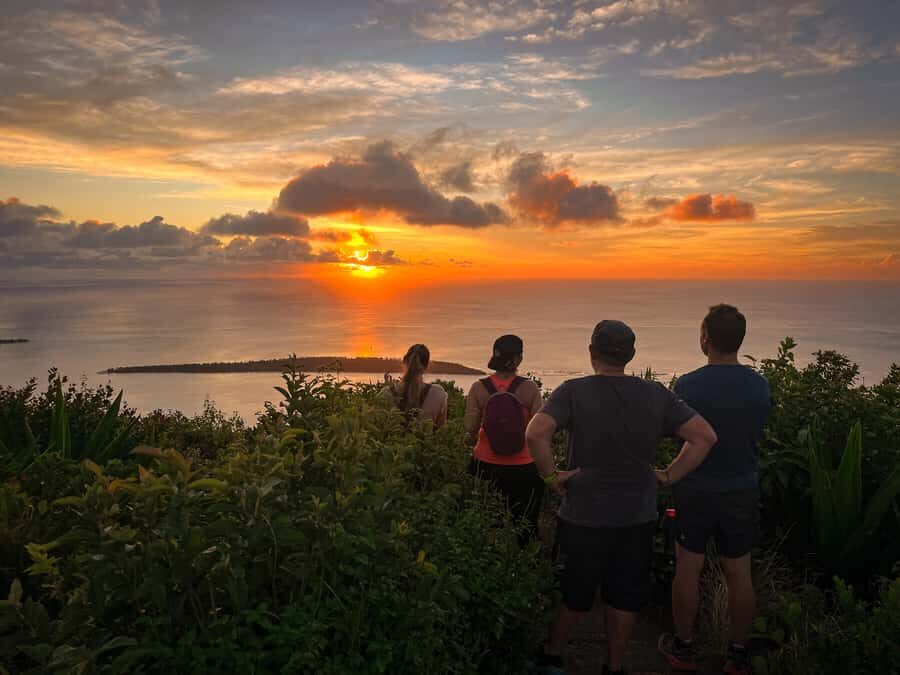
- Forest-to-ocean views: you’ll get both inland greenery and turquoise lagoon views from above
- Wildlife and birds: expect bird melodies along the ascent, plus talk on native and introduced species
- 3 hours, simple gear needed: you’re hiking light, staying focused, and not stuck all day
Chamarel at golden hour: what a 3-hour summit hike really feels like
Chamarel’s summit hike in Mauritius is built around a simple promise: you’ll earn the view. You start with the day still holding its breath—either just before sunrise or later in the afternoon—and then the mountain takes over. Your pace matters, but so does your attention. The best part isn’t only the final photo. It’s how quickly your surroundings start to shift: darker paths, cooler air, then warmer light as you climb.
This hike also has a “small quiet” vibe because it’s on the southwestern side of the island and away from the busiest tourist zones. That means you’re more likely to hear birds, your own footsteps, and the guide’s calm explanations without constant background noise.
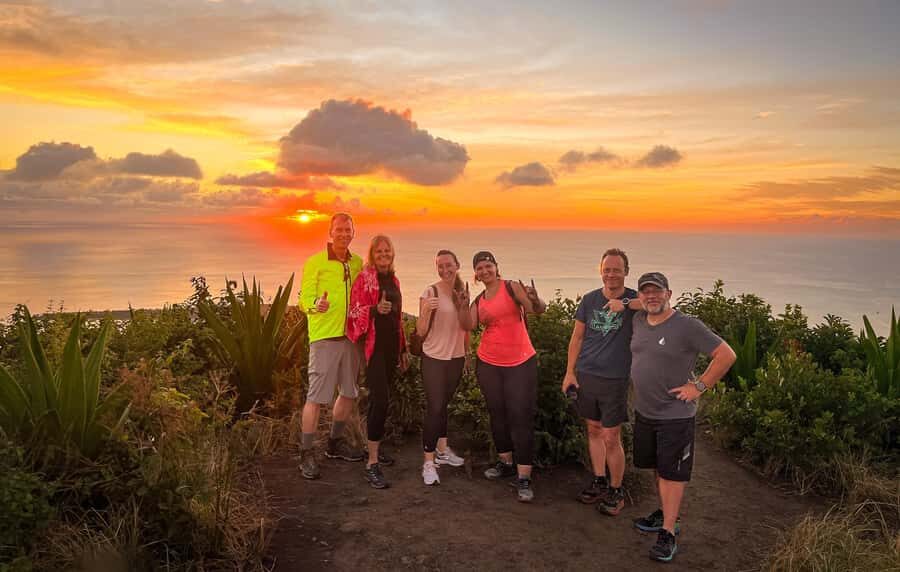
And yes, there’s a color payoff. Sunrise brings pinks and golds across the horizon, and sunset turns the whole view into layers—mountain silhouettes against a bright sky, then fading into twilight. If you like photos, you’ll understand why people bring cameras. If you don’t, you’ll still feel the mood shift up there, in the few minutes between light and dark.
You can also read our reviews of more tours and experiences in Chamarel.
Meeting your mountain guide: facts, safety, and real nature talk
Your experience runs with a live mountain guide (English or French). The guide in the recent bookings I saw—Kevin—comes across as both friendly and focused. That matters because this hike isn’t just “walk and look.” You need confidence on trails, and Kevin’s job is to keep you safe while pushing you just enough.
What you get on the path feels like a field lesson, not a lecture. The guide shares points about Mauritius, including:
- History and culture
- Economic diversity
- Geology
- Flora and fauna (including endemic and exotic species)
This blend is one of the most practical parts of the hike. When you know what you’re looking at—why certain plants are where they are, or what shaped the island’s features—you stop treating the view like scenery and start treating it like evidence.
You also get small, helpful direction during the walk. One booking specifically highlights that Kevin makes sure you carry enough water, which is exactly the kind of detail that turns an enjoyable hike into a safe one.
Sunrise vs sunset: how to choose your light (and how it changes the hike)
Even though it’s the same mountain, sunrise and sunset feel different under your feet.
Sunrise hike: crisp air and a headlamp start
A sunrise session usually means you begin before the sun arrives. That’s why the hike includes a headlamp. With early light still minutes away, you hike with purpose—quiet steps, cool temperatures, and a calmer atmosphere. The early start is also what gives you time to get up to the summit before the first real rays start washing everything in orange and gold.
If you love the feeling of the island waking up, sunrise is the choice. Expect the air to feel sharper, and expect a steadier sense of silence early on. The guide helps you notice things along the way, so you’re not just looking at the ground for footing—you’re also listening to bird calls and watching light spill into the forest canopy.
Sunset hike: late-afternoon energy and fading warmth
A sunset hike starts late afternoon. The big advantage here is that you’re hiking in cooler temperatures compared with midday, and the sky is already doing something interesting as you climb. You’re aiming to reach the summit before the sun drops too far, so you can watch the colors intensify and then turn into twilight.
This is often the more relaxed-feeling option because you’re not stepping into full darkness. Still, you’ll want to take the climb seriously. The light changes fast, and that affects how easy it is to judge distance and trail texture.
You can also read our reviews of more hiking tours in Chamarel
Quick decision tip
Choose sunrise if you want quiet and that first-color magic. Choose sunset if you prefer a warmer start and a slower mood shift into evening.
The climb itself: forest shade, bird melodies, and ocean views
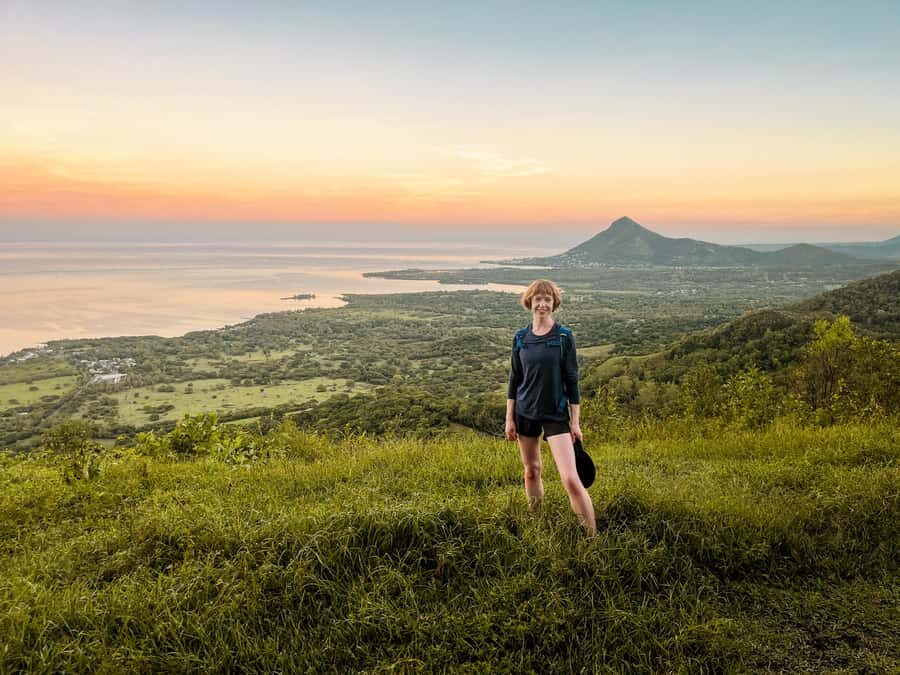
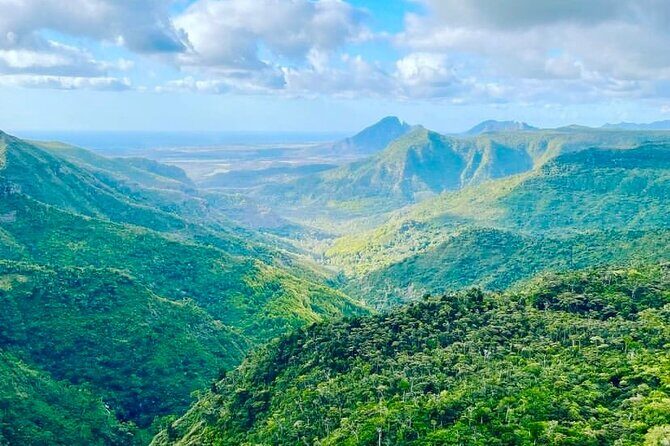
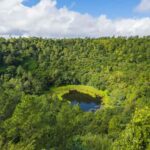
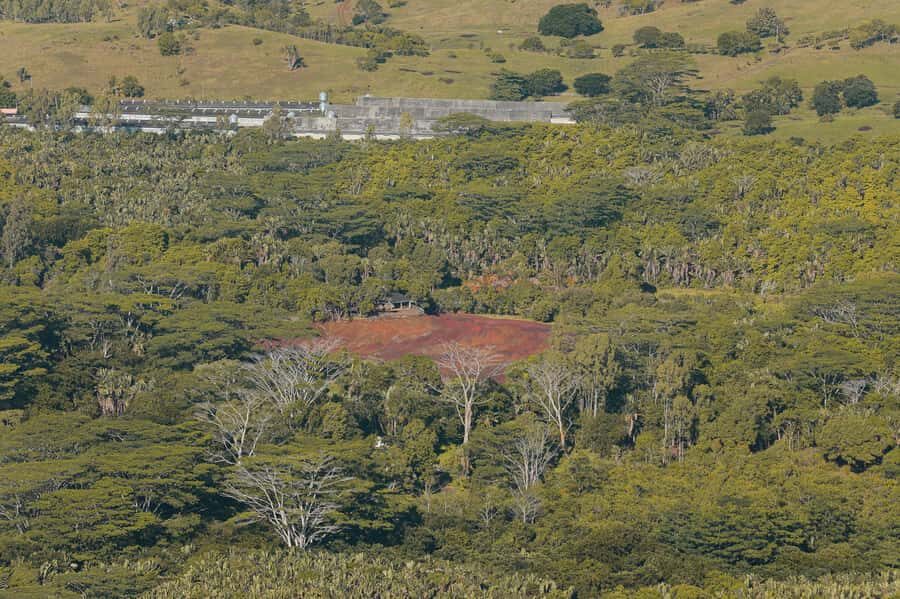
The route is special because it combines different “worlds” in one short hike. You begin with the feel of forest paths—leaf rustle, shaded sections, and that sense of being tucked away from the road. As you ascend, the view opens, and you start seeing the island’s features more clearly.
One of the core promises here is a combination of:
- Forest scenery
- Ocean and lagoon views
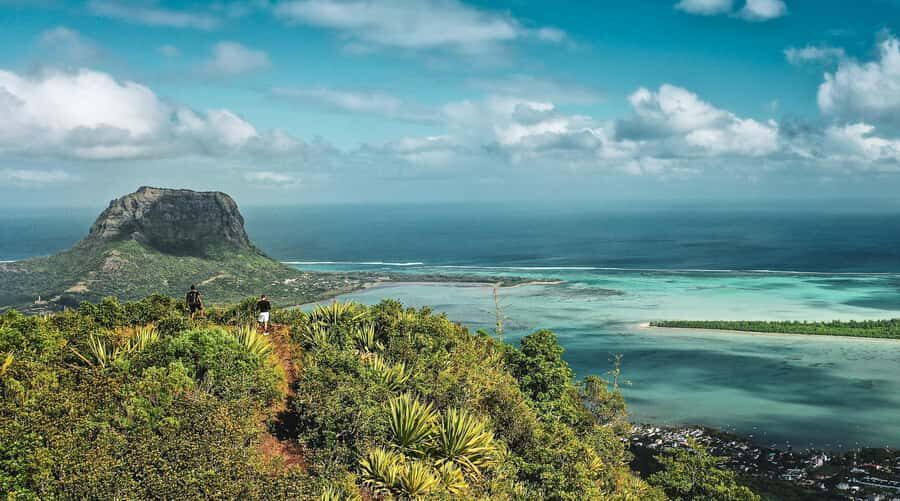
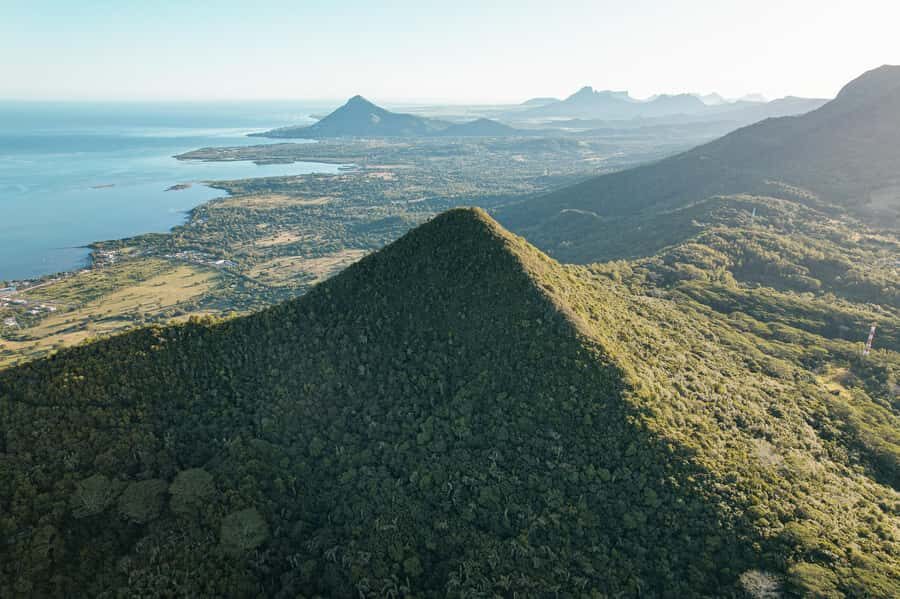
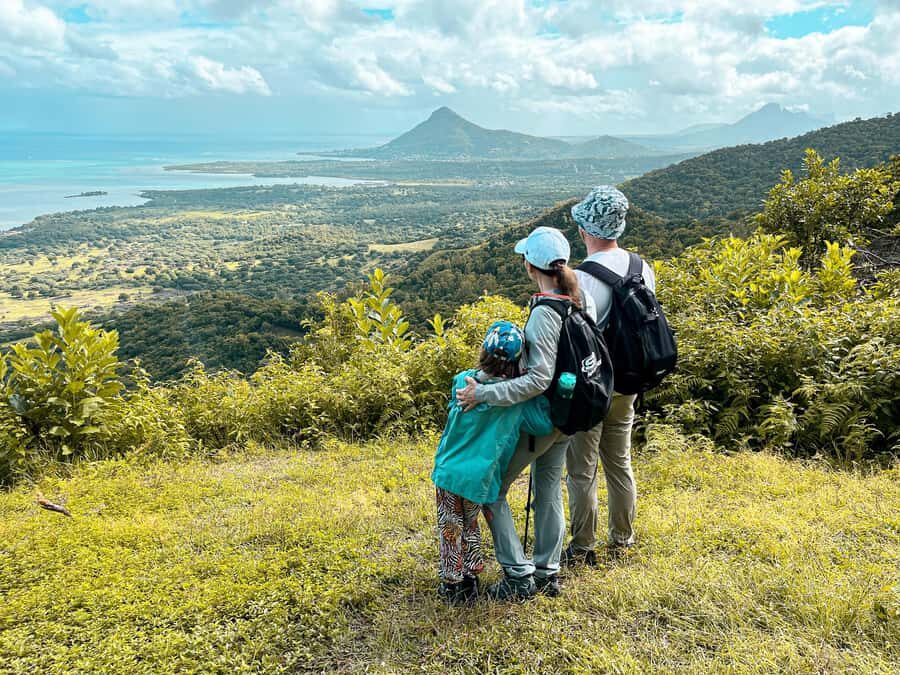
As the climb progresses, you can watch the geography unfold around you. You’ll see the turquoise lagoon appear in the distance as the perspective widens. That mix is exactly what makes the summit worth the effort: it’s not just a height thing. It’s a “change of scenery” thing.
And you’ll hear birds. The hike is described as having melodies from endemic and exotic birds, which makes the forest feel alive instead of empty. Even if you’re not a birdwatcher, the soundscape helps you slow down and pay attention.
Why the summit moment matters: reflection, photos, and color layers
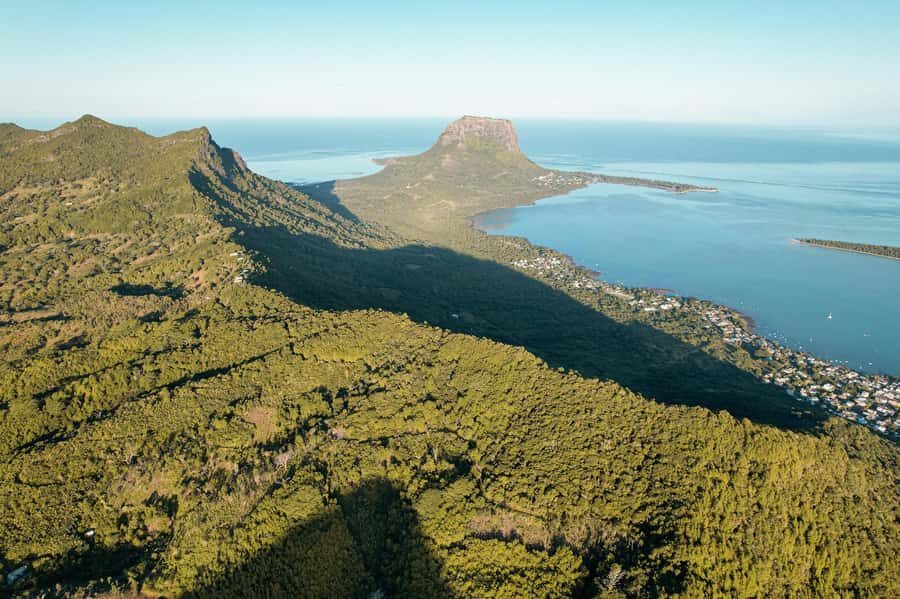
Reaching the top is only half the story. The other half is what you do with the light once you’re there.
At the summit, you get time to take photos and to pause. Sunrise sessions include a reflective pause as the golden glow spreads across the surrounding mountains. Sunset sessions offer a different kind of pause: you watch the sun descend, then you stay for the fading colors as the landscape transitions into twilight.
This is where photography pays off. You get strong contrasts—mountain silhouettes against bright sky during sunrise or sunset. If you like simple composition, this is a great spot. If you like more creative angles, bring a camera and keep experimenting during the few minutes when the sky is still changing quickly.
Also, the guide’s talk continues up here. You’re not just standing in silence looking at distance; you’re learning. That’s one of the main reasons people walk away feeling like the hike had meaning, not just views.
What’s included, and what you should bring (so the 3 hours feel easy)
For $69 per person, you’re not paying only for a viewpoint. You’re paying for a guided mountain experience that includes:
- Cereal bar
- Headlamp
- Mountain guide (English or French)
The included cereal bar is small but smart. Hikes on an early schedule can catch people off guard, and a little snack helps you start without feeling shaky.
From your side, the most important items are about traction and comfort:
- Comfortable shoes and, ideally, proper hiking shoes
- Camera
- Sunscreen
- Water
- Insect repellent
- Daypack
The activity also comes with clear rules:
- No sandals or flip-flops (traction matters)
- No oversize luggage
- No smoking or vaping
- No littering, no making noise, no fire
- No bare feet
If you’re thinking, I’ll wear trail runners, that’s often the right idea. If you’re thinking, I’ll just wear something casual, then you’ll probably feel it on the climb. This is one of those “dress for the ground” hikes.
Price and value: is $69 worth it?
$69 for a 3-hour guided hike can feel like a “nice add-on” or a “serious cost,” depending on what you usually do on vacation. Here’s how I’d think about value.
You’re paying for:
- A professional mountain guide who talks about Mauritius while you hike
- Safety-focused mountain handling (especially noticeable in how guides keep you moving confidently)
- Light hiking support: headlamp and cereal bar
- A tightly timed experience built around sunrise/sunset summit access
If you tried to do this independently, you’d save money but you’d likely lose the “why.” The guide’s information on geology, local culture, and the island’s ecosystem turns a climb into a learning moment. And because the timing matters for the best light, having someone who brings you up in the right window reduces stress.
So for many people, it’s good value if you want a guide-led experience rather than DIY scenery.
Who this hike suits best (and who should skip it)
This hike is not “pick up and stroll.” It’s for people who can handle stairs, uneven footing, and the mental focus of being on a mountain trail.
It isn’t suitable for:
- Pregnant women
- People with back problems, mobility impairments, heart problems, vertigo
- People afraid of heights
- People with respiratory issues
- Visually impaired people or those who get altitude sickness
- People with haemophilia, high blood pressure, recent surgeries
- People with low fitness
- People with motion sickness
If that’s you, don’t force it. One of the best ways to ruin a sunset is by worrying the whole time. Safety comes first.
If you’re the type who likes being outside early, who enjoys learning while walking, and who can hike for a few hours with a daypack, this is a strong match. It’s also a good choice for photographers because the summit light is dramatic.
Practical timing and weather reality (without killing your plans)
Weather can change mountain conditions, so it’s good to know the activity can be rescheduled in case of adverse weather at no extra cost. That takes some pressure off your schedule. If clouds roll in early, you’re still in the right kind of system to adapt.
Also, you should plan for the possibility that pickup and drop-off from your accommodation may cost extra. Many people build that into their budget so they’re not surprised on the day.
Should you book Chamarel Sunset Mountain Hike?
Book it if you want a guided summit hike where the timing is real, not optional. Choose this if you like a sunrise/sunset goal, you want views that include both forest and ocean, and you enjoy nature and island facts from a guide like Kevin who keeps things friendly and safety-minded.
Skip it if you have any of the listed health or mobility issues, if heights make you uncomfortable, or if you’re currently not fit enough for a steady climb. For those situations, it’s better to choose an easier experience and protect your energy for the rest of Mauritius.
If you match the hike level, you’ll come away with more than a photo. You’ll have that specific moment when the sky changes, birds carry the sound, and you look out over Mauritius with a guide’s explanations still fresh in your mind.
FAQ
How long is the Chamarel hike?
The experience lasts 3 hours.
Does this hike run for both sunrise and sunset?
Yes. The experience is described as a summit hike for either sunrise or sunset.
What language is the guide?
The live guide is available in English and French.
What’s included in the price?
The hike includes a cereal bar, a headlamp, and a mountain guide.
What should I bring?
Bring comfortable shoes or hiking shoes, a camera, sunscreen, water, insect repellent, and a daypack.
Is transportation from my hotel included?
Collection (pickup and drop-off from and to your accommodation) can be arranged, but it may cost extra.