REVIEW · CHAMAREL
Food Tasting & Market Shopping: Private Guided Tour in PORT LOUIS
Book on Viator →Operated by Beguided Tours · Bookable on Viator
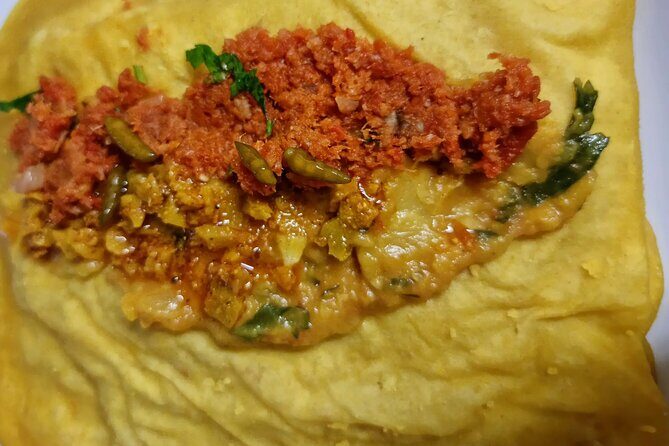
A good lunch in Port Louis starts with a plan. This private food tasting and market shopping outing strings together street bites, local markets, and major sights—without you having to stitch routes together yourself. I like the focused sampling of Dalpuri, Gato Dhal, and Roti, and I also like that lunch plus entrance tickets and round-trip private transport are built in. The one catch: it’s not recommended on Sundays, when the city can feel quieter and some shopping energy may be lower.
If you get a strong guide, the whole day feels like it has momentum. People have raved about guides such as Afjal Codabaccus, and the experience is also associated with standout drivers like Kiaran and Viraj. Starting at 10:30 am, you’ll see a lot of Port Louis in about 3 to 5 hours, but it’s a tight, concentrated format—so go in with realistic expectations about tasting portions and shopping time.
In This Review
- Key highlights worth knowing
- Why this Port Louis food tour works (even for short stays)
- The 10:30 am start and 3 to 5 hour pacing
- Port Louis first: markets, clothes shopping, and getting your bearings
- Citadel Fort Adelaide: built for defense, rewarded with a view
- Aapravasi Ghat: a museum stop that adds meaning to the food day
- Le Caudan Waterfront: the Port Louis center of gravity
- Blue Penny Museum: postal history meets British and French connections
- Central Market for real local shopping energy (and budget-friendly finds)
- Champ de Mars and Chinatown: quick cultural stops that add texture
- Le Craft Market: Mauritian-made souvenirs before you head back
- Price and value: what $119.98 per person is buying you
- Guides matter: what strong guidance feels like
- Who this tour suits best (and who should skip it)
- Should you book? My practical call
- FAQ
- How long is the Port Louis Food Tasting & Market Shopping tour?
- What time does the tour start?
- Is the tour private?
- What food is included in the tasting?
- Which museums are part of the itinerary?
- Is the tour recommended on Sundays?
Key highlights worth knowing
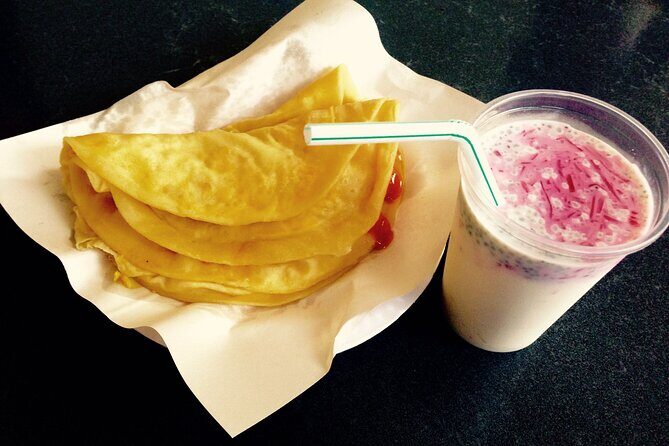
- You taste multiple classic Mauritian street foods like Dalpuri, Gato Dhal, and Roti, plus a milky drink can be part of the day
- Markets are not an afterthought: Central Market and Le Craft Market are included for shopping that feels local
- Major heritage stops are scheduled: Aapravasi Ghat and the Blue Penny Museum
- Views come with the history at Citadel Fort Adelaide
- Le Caudan Waterfront is the day’s anchor—easy to recognize and a central Port Louis hub
- Private transport keeps the pace smooth so you spend less time figuring out logistics
Why this Port Louis food tour works (even for short stays)

Port Louis is compact, busy, and multicultural—but that’s exactly why it’s easy to feel lost when you’re trying to hunt down both food and the “important” landmarks. This tour solves that with a simple structure: you start in the city center, do targeted market time, eat lunch, and then stack on heritage stops that explain why Mauritius looks the way it does today.
I especially like that the tour isn’t just about eating. You also get a guided tour feel through places like Aapravasi Ghat (a museum site) and the Blue Penny Museum, where postal history and British/French connections show up in the displays. It turns lunch from a standalone moment into part of a larger story.
One more practical point: because the tour is private, you don’t have to wait around for a big group to catch up. Your guide can adjust the shopping pacing to your interests—within the set timing, of course.
You can also read our reviews of more food & drink experiences in Chamarel

The 10:30 am start and 3 to 5 hour pacing

The tour starts at 10:30 am and typically runs about 3 to 5 hours. That time window matters because Port Louis sights can be spread out, and markets move fast. This schedule is built to keep you moving without turning the day into a nonstop sprint.
You’ll bounce between food stops, viewpoints, and museums. The itinerary includes several scheduled time blocks—for example, 50 minutes at Le Caudan Waterfront and 45 minutes at Central Market—so you’re not just “passing by.” But it’s still a condensed plan. If you like slow wandering and long restaurant sessions, you’ll likely want extra free time after the tour.
Also note the meeting approach: it’s near public transportation and uses a mobile ticket. That usually means it’s straightforward to start your day without a complicated handoff.
Port Louis first: markets, clothes shopping, and getting your bearings
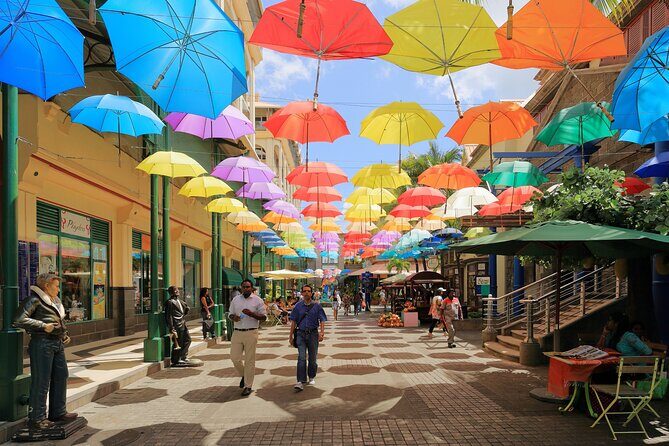
The itinerary begins in Port Louis, the capital of Mauritius and the site of the island’s main port. Even though the first listed stop is short, the idea is clear: set you down in the city where most local life and shopping happen, then let the guide steer you.
Port Louis is known here for clothing shopping at the main local markets. If you’ve never shopped in a dense market zone, it helps to have someone pointing out where to go first, what to expect, and how to move efficiently. The tour’s pacing also means you’ll get market exposure early, before you’re tired and hungry enough to miss details.
If shopping is a big goal, this is one of those days where you’ll get the most value by going in with a short list—like a type of souvenir you’re after—because time is limited.
Citadel Fort Adelaide: built for defense, rewarded with a view
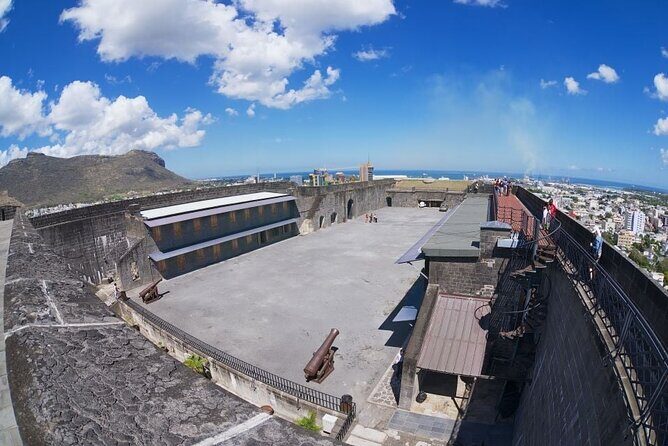
Next up is Citadel Fort Adelaide, built to defend Mauritius. The stop is timed at about 30 minutes, and the payoff is twofold: you get the fort context, and you also get the amazing view aspect that makes forts memorable.
This is a good contrast to market time. After you’ve been indoors and among stalls, the fort gives you a chance to step back and orient yourself visually. Even if you’re not a “fort person,” the view and the defensive history help you connect the city’s layout to why these structures exist.
What to consider: because it’s a short stop, you’ll want to ask quick questions if there’s something specific you want explained—otherwise the time can feel like a snapshot rather than a full deep read.
Aapravasi Ghat: a museum stop that adds meaning to the food day
Aapravasi Ghat is next, scheduled for about 45 minutes, and it’s described as a very beautiful museum in Mauritius. This is where your tour shifts from food-and-shopping to meaning.
Why it pairs well with a food day: Mauritius food culture is tied to the island’s migration patterns and colonial past. When you walk through a heritage site like Aapravasi Ghat, the dishes you’re tasting feel less like random street food and more like part of a bigger cultural mix.
This stop is also a helpful energy reset. You’ll likely want a bit of calm after market noise, and the museum setting offers that without dragging the schedule.






Le Caudan Waterfront: the Port Louis center of gravity
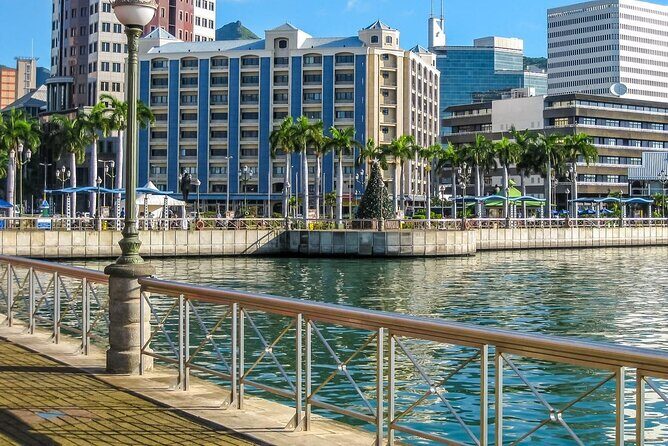
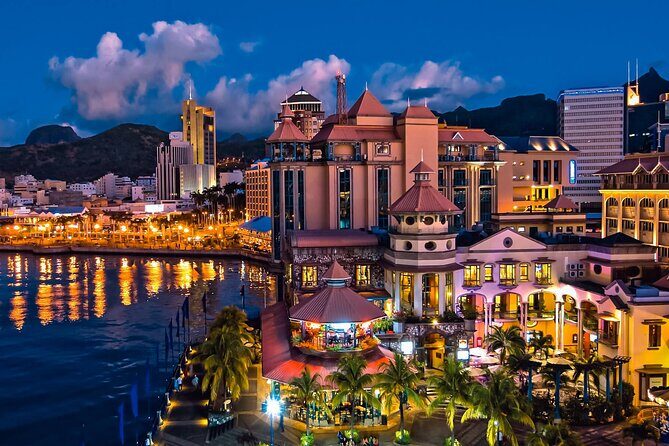
Then you head to Le Caudan Waterfront, timed at about 50 minutes. This is described as the most visited place in Port Louis and the center point of the excursion. In other words: this is where the tour “lands” in a more recognizable hub.
Practically, Le Caudan is often a good place to regroup, take photos, and do any last-minute snack adjustments before you move on to the more shopping-heavy market segments. It’s also a good spot for people who want a bit of structure—something clearly organized compared with the Central Market vibe.
If you’re someone who prefers shopping to sights, you’ll still likely enjoy Le Caudan, but you might spend most of your attention on the surrounding areas where the day’s route keeps you close.
Blue Penny Museum: postal history meets British and French connections
One of the most valuable stops on this tour is the Blue Penny Museum, scheduled for about 40 minutes. You’re there if you want to learn Mauritius history in more detail, and the museum’s strong suit is postal history—including British and French associations that show up in the displays.
This isn’t just a “ticket stop.” It’s the kind of museum that helps you understand why Mauritius holds on to certain historical symbols, and it gives context you can carry into the rest of your trip. If you’re the type who likes seeing how everyday culture connects to the past, you’ll probably appreciate this stop more than you expect.
Practical consideration: museums can be hit-or-miss for some people. But this one has a narrow theme (postal history), which tends to keep it from feeling like endless rooms.
Central Market for real local shopping energy (and budget-friendly finds)

After the museum, you shift back to shopping with Central Market, scheduled for about 45 minutes. The tour positions this as the place to experience a true local Mauritian experience, especially for shopping lovers, and it’s described as cheap and easily available.
This is where you’re most likely to pick up souvenirs that feel like they belong to Mauritius rather than to a generic tourist market. It’s also the segment where having a guide matters because markets can be overwhelming when you’re trying to compare quality, prices, and what’s actually easy to carry home.
What I suggest: decide what you’ll buy before you walk in. In a dense market, time disappears fast, and you don’t want to spend your entire shopping window trying to figure out what you even came for.
Champ de Mars and Chinatown: quick cultural stops that add texture
The itinerary also includes Champ de Mars, the horse racing track established in the 80s by the British during their rulership. You’ll also visit China town, noted as the only place in Mauritius where you can experience a Mauritian Chinese environment.
These are great texture stops. They break up the day so it doesn’t feel like food and markets back-to-back. And they give you quick cultural contrasts—useful if you like seeing how different communities shape the city’s look and feel.
Because no exact timing is provided for these segments, think of them as included moments to absorb rather than deep dives. If you’re hoping for long explanations at both, make sure you ask your guide during the scheduled portions.
Le Craft Market: Mauritian-made souvenirs before you head back
The last listed stop is Le Craft Market, timed at about 30 minutes, and it’s described as the local craft market where everything is Mauritian made. This is the ideal closer because it gives you a final chance to buy something that feels tied to the island’s identity.
I like ending here because you can compare what you’ve already seen at Central Market and decide what fits your taste and budget. It’s also a practical way to avoid the last-minute scramble for gifts later.
Price and value: what $119.98 per person is buying you
At $119.98 per person (and often booked around 32 days in advance), you’re paying for more than just a walking tour. What you’re really buying is a bundled day: private transport, entrance tickets, a lunch at a Mauritian restaurant, and food tasting connected to markets.
That makes the price easier to justify, especially if:
- you don’t want to spend your limited time figuring out tickets and routes,
- you care about both food and heritage stops,
- you’d rather pay for guidance than risk missing the best market corners.
The potential drawback is also tied to value: because the tour is only a few hours long, the tasting portion may feel more like a curated selection than a massive “all-you-can-eat” plan. If your main goal is maximum food quantity, you might want to treat this as the first course of your Port Louis eating day—and then plan a second meal on your own after.
Guides matter: what strong guidance feels like
One of the standout themes from the experience is the quality of guiding. Names that come up include Afjal Codabaccus and Hans. Another helpful element is the driver experience—people mention Kiaran as particularly entertaining and Viraj as knowledgeable and made things comfortable.
Here’s the key takeaway you can use: if you want maximum value, ask your guide questions early. Things like what to order at lunch, what a local market item should cost as a starting point, or which streets are best for photos can turn the day from passive sightseeing into a city lesson.
Who this tour suits best (and who should skip it)
This tour is a strong fit for you if:
- you want a private plan in Port Louis with minimal logistics stress,
- you want to taste Dalpuri, Gato Dhal, and Roti as part of a guided market day,
- you like mixing food with museums, especially Aapravasi Ghat and Blue Penny Museum,
- you’re shopping for souvenirs and want a guided route that covers more than one market.
You might want to pick another option if:
- you’re visiting on a Sunday, since the tour isn’t recommended for that day,
- you prefer long, slow free time in one neighborhood over multiple short stops,
- your idea of a food tour is lots of repeated dishes and heavy quantities.
Should you book? My practical call
If your Port Louis day needs structure—food, shopping, and heritage in one package—this is a smart way to spend the morning and early afternoon. The best part is the pairing of markets with the museum stops, which turns lunch into context instead of just calories.
I’d book it if:
- you like street food and want local favorites introduced for you,
- you want entrance tickets included,
- you want a private driver-guided pace that gets you to the key places without fuss.
I’d think twice if it’s your only day in Port Louis and you’re visiting on Sunday, or if you’re the type who needs lots of shopping time in one place. In those cases, you could do a lighter food plan and keep more flexibility.
FAQ
How long is the Port Louis Food Tasting & Market Shopping tour?
It runs about 3 to 5 hours.
What time does the tour start?
The start time is 10:30 am.
Is the tour private?
Yes. It’s a private tour/activity, so only your group participates.
What food is included in the tasting?
You’ll taste Mauritian street foods such as Dalpuri, Gato Dhal, and Roti. The tour also includes meals, including lunch at a Mauritian restaurant with diverse menu options.
Which museums are part of the itinerary?
You’ll visit Aapravasi Ghat (museum) and the Blue Penny Museum.
Is the tour recommended on Sundays?
No, it’s not recommended on Sundays because there is less activity.