A day like this keeps you moving. You’ll see southwest Mauritius in one long loop, from volcanic craters and Hindu temple rituals to the surreal Seven Colored Earth, plus a stop for a real Mauritian-style 3-course lunch. The biggest thing to watch is that the route is weather-dependent, and some people have run into access limits when roads close.
What I like most is how the day mixes big sights with short breaks that help you breathe between stops. You also get a guided rum experience at Rhumerie de Saint Aubin, not just a quick photo op. The main consideration: depending on the day and vehicle, the comfort level can vary, so wear good shoes and bring a bit of patience for a full 8–9 hour ride.
In This Review
- Key highlights worth your attention
- Southwest Mauritius in One Long Day: What This Tour Feels Like
- Trou aux Cerfs: A Dormant Volcano Rim With Forest Underfoot
- Mare aux Vacoas Reservoir: The Scenic Pause That’s Not About Souvenirs
- Grand Bassin (Ganga Talao): Shiva, Shrines, and Big Sacred Energy
- Alexandra Falls: Classic Mauritius Postcard Views
- Black River Gorges National Park Viewpoint: A Quick Walk to Real Drama
- Twenty-Three Colored Earth in Chamarel: The Science Behind the Surreal
- Chamouny Waterfall: The Single-Drop Moment
- Gris Gris Beach: Cliffs, Waves, and a Truth About Swimming
- Rhumerie de Saint Aubin: How Sugarcane Turns Into Rum
- Lunch and the Small-Group Reality: What You’ll Be Eating, and What to Expect
- Price and Value: Is $131.24 a Fair Deal for This Day?
- Who This Tour Fits Best (and Who Should Skip It)
- Should You Book the South of Mauritius: 23-Colored Earth & Rhumerie de St Aubin?
Key highlights worth your attention
- Seven Colored Earth in Chamarel: a lunar-looking mix of sand colors tied to the island’s geology
- Grand Bassin (Ganga Talao) temple: a huge 33-meter Lord Shiva statue that draws crowds year-round
- Alexandra Falls and viewpoints: postcard views paired with short walks like the 3–5 minute gorge viewpoint
- Rhumerie de Saint Aubin rum tasting: guided distillery visit plus tasting of multiple rum styles
- Mauritian lunch included: 3-course meal with non-alcoholic drinks (and halal options noted)
Southwest Mauritius in One Long Day: What This Tour Feels Like
This is the kind of day trip that works best when you like variety more than staying put. You’re not lingering in one place for hours. Instead, you’re driving a scenic arc through the southwest, hitting a chain of landmarks that each tell a different part of Mauritius: volcanoes, sacred Hindu sites, dramatic water, and the island’s rum heritage.
The price, about $131.24 per person, isn’t just for driving. You’re paying for round-trip hotel pickup, a full-day schedule, entrance support for major sites, and the built-in “food + transport” package. Add in the lunch and the Rhumerie distillery tasting, and the value starts to make sense—especially if you’d otherwise have to rent a car and coordinate stops yourself.
The tradeoff is time. Expect 8 to 9 hours, with plenty of photo stops and short visits, but not long wandering. If you want slow travel, this tour is more of a brisk sampler. Also, the day is explicitly tied to decent weather. When weather turns, parts of the route can change.
You can also read our reviews of more tours and experiences in Chamarel.
Trou aux Cerfs: A Dormant Volcano Rim With Forest Underfoot
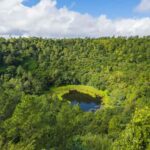
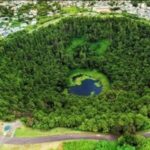
Your morning starts with Trou aux Cerfs, a famous crater in Mauritius. It’s a dormant volcanic feature about 605 meters above sea level, with a diameter near 350 meters and a depth roughly 100 meters. From a distance it’s visually striking, but what makes it more interesting is what surrounds it.
The crater is ringed by lush forest, including indigenous plants and giant green pine trees. That combo matters because you’re not just looking at a “hole in the ground.” You’re standing at a viewpoint that feels like a living natural area, which helps break up the driving time and gets your bearings fast.
Practical tip: wear shoes with solid grip. You’ll likely be walking on uneven ground and you don’t want to be thinking about your footing when you’d rather focus on views.
Mare aux Vacoas Reservoir: The Scenic Pause That’s Not About Souvenirs
Next comes a quieter, more locals-and-nature stop: Mare aux Vacoas, also called the reservoir viewpoint. The numbers here are big: it’s described as the island’s largest reservoir with a capacity close to 26 million cubic meters.
This stop is brief, but that’s part of the appeal. It gives you a chance to step away from the “main attraction” mentality and enjoy the view framed by thick forests. There are times when tours feel like a factory line of checkpoints; this one gives you an actual reset moment.
If you’re the type who likes water and shade, you’ll probably enjoy this more than you expect. If you’re chasing only iconic photo spots, you might find it lighter than the later stops.
Grand Bassin (Ganga Talao): Shiva, Shrines, and Big Sacred Energy
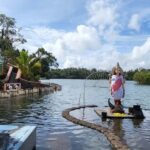
Then the day turns strongly spiritual at Grand Bassin, also commonly called Ganga Talao. It’s a crater lake around 550 meters above sea level in the mountainous southwest, and on the shoreline sits a temple complex with shrines dedicated to Lord Shiva and other gods.
What people remember is the Lord Shiva statue: 33 meters high and described as the highest known statue in Mauritius. The statue is said to be smiling and peaceful, and even if you’re not a temple person, the scale is hard to ignore.
This stop has two layers for you:
- It’s a striking landmark that’s easy to photograph.
- It’s also a place where you’re witnessing living tradition, not staged scenery.
Consideration: it’s a sacred site, so dress and behavior matter. Keep your visit respectful and give yourself time to look around without rushing.
Alexandra Falls: Classic Mauritius Postcard Views
After the temple, you move to Alexandra Falls, one of Mauritius’s most popular nature sites. It sits about 700 meters above sea level, and it’s known for those postcard angles where you can see the turquoise ocean stretching out.
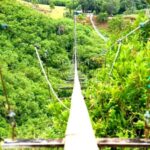
There’s also a practical option here: you can climb a wooden platform to get a fuller view. This is one of those stops where the “climb” is usually short, but it can noticeably improve your photos and your sense of scale.
The drawback is the same one that affects much of the island: conditions can change. If it’s wet or visibility is low, the ocean look can be less crisp. And since the tour is weather-dependent, you should expect the operator to adjust plans if conditions get unsafe.
Black River Gorges National Park Viewpoint: A Quick Walk to Real Drama
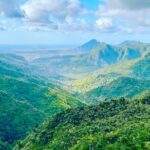
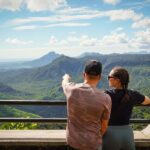
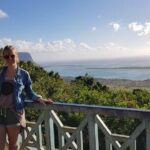
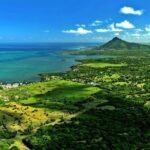
Midway between Chamarel and Alexandra Falls, you’ll stop at a gorge viewpoint in the Black River Gorges National Park area. It’s described as a great panoramic spot, with a 3–5 minute walk from the road to reach the viewpoint.
This is the kind of stop I like because it’s short effort, big payoff. You’re elevated above the gorge below, and the description notes a waterfall off to the right. That quick shift in viewpoint helps your day feel less repetitive: you go from crater and temples to broad natural power.
Practical tip: bring layers. Elevated rainforest viewpoints can feel cooler than the road-level driving.
Twenty-Three Colored Earth in Chamarel: The Science Behind the Surreal
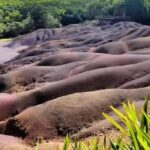
Now you reach the star attraction: Twenty-Three Colored Earth, also known as Seven Colored Earth. You’re in Chamarel, and the scene is often described as lunar-like sand dunes with rainbow tones. It’s surreal in the best way.
Here’s the meaningful detail: the colors are explained as developing through the conversion of basaltic lava to clay minerals. So yes, it looks like art. But it’s also geology doing its thing.
You’ll be told the colored earth area includes sand in about seven distinct colors—red, brown, violet, green, blue, purple, and yellow. If you’ve ever wondered why a natural feature can look so “designed,” this is where the island earns your attention.
The one caution: this stop is visual-heavy. Spend enough time to see it from different angles, but don’t expect a long hike. It’s more about observing texture and color than trekking.
Chamouny Waterfall: The Single-Drop Moment
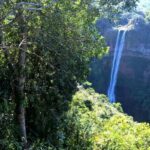
Close by, you’ll visit Chamouny Waterfall, described as the single-drop waterfall in Mauritius. It’s also framed as the most famous and most recognized waterfall on the island, which helps explain why it gets included right around the colored earth.
This is another “short stop, big impression” moment. The surrounding dense vegetation adds a lot, and the waterfall’s single-drop character is distinct compared with broad waterfalls you might see elsewhere.
Consideration: if rain is heavy or conditions are slippery, your time here may need to be adjusted. That’s where shoe grip matters again.
Gris Gris Beach: Cliffs, Waves, and a Truth About Swimming
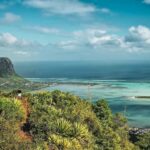
Then comes Gris Gris Beach, with a different feel from the inland viewpoints. You’ll drive through Souillac village, and then arrive at Gris Gris for coastal views.
At the cliffs, you get crashing wave scenery and a small garden area with quiet benches—nice for a breather after the earlier sights. There’s also a path leading to a small beach where you can see the sea up close.
Here’s the honest practical note: even though the sand is white, the waves and currents are described as extremely strong, so swimming isn’t advised. This matters because it’s the kind of beach where the photo looks inviting, but nature has other plans.
If you want fresh air and salt views, this stop works. If you’re hoping for a swim break, plan for viewing only.
Rhumerie de Saint Aubin: How Sugarcane Turns Into Rum
The day’s final “wow” is indoors and taste-based: Rhumerie de Saint Aubin. You’ll enjoy a guided visit of the distillery and then a rum tasting session with different flavors from the distillery’s range.
The tour focuses on how the rum-making process works, including the role of sugar cane, and it also includes opportunities to try the selection of agricultural rums produced by the distillery.
This is a smart late-day choice. After hours of outdoor viewing, a guided tasting gives your brain a different kind of “input.” It’s also a cultural add-on that you can’t replicate as easily on your own without logistics.
One more value note: the tour includes non-alcoholic drinks with lunch, and then tasting comes later at the distillery. That pacing helps most people enjoy the day without feeling like they’ve been thrown into drinking from the start.
Lunch and the Small-Group Reality: What You’ll Be Eating, and What to Expect
Lunch is included as a traditional 3-course Mauritian meal, with options for vegetarian and non-vegetarian. It’s noted as halal food, and drinks during lunch are non-alcoholic.
In practice, you should go in with realistic expectations about the restaurant. It’s included, it’s meant to keep your day moving, and reviews describe it as simple and by the road. That doesn’t mean bad food. It just means don’t treat lunch like a fine-dining destination. Think of it as fuel that keeps you on schedule.
If you have allergies, the instructions specifically ask you to advise of any illness or allergies ahead of time. Do that. It’s the difference between enjoying the meal and worrying about it.
Also, bottled water is provided upon arrival. Still, I’d bring a small personal water bottle if you run hot. Some people have reported no water in certain situations, even though the package includes bottled water—so you’ll be safer with your own backup.
Price and Value: Is $131.24 a Fair Deal for This Day?
For a full 8–9 hour southwest loop, pickup and drop-off included, and a set of major stops plus a rum tasting and lunch, the cost is fairly reasonable—especially because the day includes more than “drive-by photos.”
Here’s what’s doing the heavy lifting for your money:
- Transport and hotel pickup, meaning you’re not managing routes
- Entrance support for Seven Colored Earth and Chamarel waterfall
- A 3-course lunch with drinks
- A guided distillery visit plus rum tasting
If you’re traveling with limited time on Mauritius, this kind of “hit the highlights efficiently” tour is the easiest way to get southwest into one day without renting a car.
If you’re the type who likes long stays and lots of slow hiking, then no tour price will feel cheap. This one trades depth for breadth.
Who This Tour Fits Best (and Who Should Skip It)
This tour is a strong fit if you:
- Want a one-day introduction to Chamarel and the southwest
- Like variety: crater views, temple sights, waterfalls, coast, and rum culture
- Prefer guided logistics over self-driving
It’s not the best fit if you:
- Want lots of downtime at each stop
- Dislike time spent in vehicles (you’ll be in transit for a big chunk of the day)
- Are very sensitive to comfort variations. Air-conditioning is included, but seating comfort can vary depending on the specific vehicle used.
Should You Book the South of Mauritius: 23-Colored Earth & Rhumerie de St Aubin?
I’d book it if you want a reliable “greatest hits” day that balances nature, culture, and a local food-and-drink stop. The value is strongest when you want pickup/drop-off, lunch, and the rum distillery experience packed into one schedule.
I’d hesitate only if your priorities are purely slow and scenic with minimal driving, or if you’re traveling right at the edge of bad weather. Because the operator is clear that the experience depends on good weather, you should treat this as a day to schedule when conditions look decent.
If you do book, do two simple things: wear non-slip shoes, and bring a small extra water supply just in case your day runs slightly differently than expected.