REVIEW · PORT LOUIS
ROUTE OF INDIAN SPIRITUALITY
Book on Viator →Operated by Moris Otreman · Bookable on Viator
A Shiva story with real-world meaning. This 3-hour route of Indian spirituality in northern Mauritius uses temples, deities, and local history to explain why rituals look the way they do, from Maha Shivaratree to Ganesh Chaturti. I especially liked the way the guide ties symbols to everyday Mauritian life, and how the explanations stay respectful but never stiff.
Two things I really liked: the playful-yet-serious storytelling around big Hindu questions (blue neck Shiva, watering the lingam, Ganesh’s broken right tusk), and the sense of context you get for how these traditions shaped Mauritian society over time. One thing to keep in mind: this experience relies on good weather, and the whole outing is timed tightly around temple stops.
Key highlights you’ll feel fast
- Three temples in one focused route that link myth to present-day Mauritius
- Shiva, Muruga, and Ganesh explanations that answer the why behind common ritual details
- A guide-led walkthrough (Eric is noted for clear, insightful explanations)
- Festival-minded pacing, with chances to follow processions or prayers on specific dates
- A 15-meter Muruga statue tied to a famous Batu Caves reference in Kuala Lumpur
In This Review
- A Shiva story with Mauritian context: why this tour feels different
- Your 3-hour temple route: start time, private group, and pacing
- Stop 1: Temple de Triolet and the 1898 Maha Shivaratree origin
- Stop 2: Cap Malheureux first Tamil kovil and the power of local legends
- Stop 3: Cap Malheureux Muruga statue, 15 meters, and the Batu Caves link
- The big myth questions you’ll actually care about
- Festivals you can connect to on the ground: Shivaratree, Cavadee, and more
- Value for money: what $64.61 buys you in real insight
- Who should book this route of Indian spirituality
- Booking advice: when it’s worth it, and when to rethink it
- FAQ
- How long is the Route of Indian Spirituality tour?
- What is the price per person?
- What time does the tour start?
- Where do we meet for the tour?
- Is this tour private?
- How do I get the ticket?
- Are service animals allowed?
- Can I cancel for free?
- Is the tour weather-dependent?
A Shiva story with Mauritian context: why this tour feels different
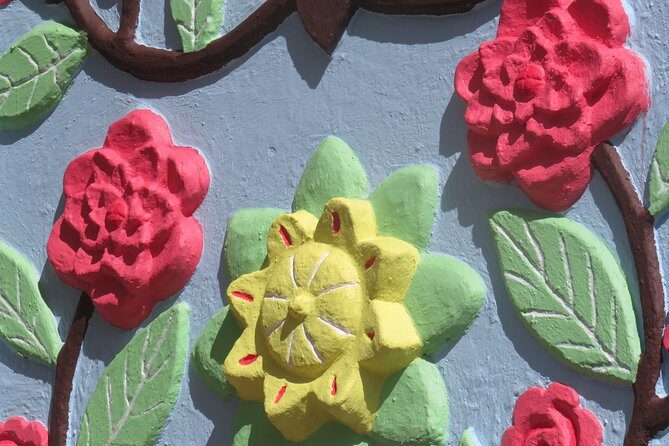
If you’ve ever seen a Hindu temple in Mauritius and wondered what you’re looking at, this is the kind of tour that helps you stop guessing. You’re not just touring buildings. You’re hearing how people interpret symbols, why they repeat certain actions, and how these beliefs traveled, changed, and still matter.
The best part is the balance. The approach is playful in the sense that it asks questions out loud, but it stays respectful about what you’re seeing. When the guide raises a prompt like why Shiva is shown with a blue neck, you’re not being asked to memorize random trivia. You’re being walked through the logic that makes the image meaningful to worshippers.
And because it’s in Mauritius, the myths don’t float in a vacuum. The tour connects Indian spiritual traditions with Mauritian history, including slavery and the long work of building community identity afterward. That context is what turns a temple visit from sightseeing into understanding.
Your 3-hour temple route: start time, private group, and pacing
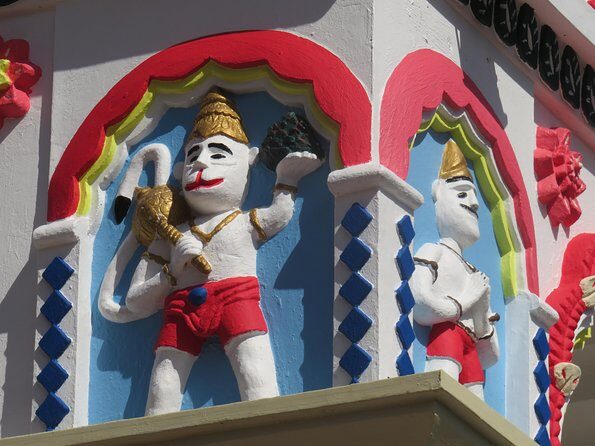
The tour runs about 3 hours and starts at 9:00 am. You meet at La CroisetteMU, Chem. Vingt Pieds, Grand Baie 30517, Mauritius, and it ends back at the meeting point.
This matters more than you’d think. With only three stops, the schedule has to be tight enough to keep momentum, but slow enough that the symbolism actually lands. If you like guided conversation instead of rushing selfie stops, the format works well.
You’ll also have a true private experience for your group. That means you can ask questions without feeling like you’re competing with a crowd. The tour uses a mobile ticket, so you can keep things simple on your phone.
Practical notes from the tour details: service animals are allowed, the route is near public transportation, and most travelers can participate. If you’re bringing mobility constraints, I’d still check with the operator in advance, but the schedule is built around short temple visits rather than long hikes.
You can also read our reviews of more tours and experiences in Port Louis.

Stop 1: Temple de Triolet and the 1898 Maha Shivaratree origin
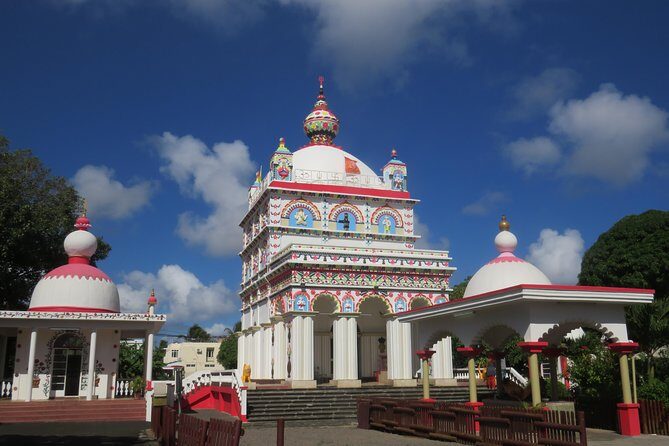
The tour begins at the temple de Triolet, described as the starting point of the first Maha Shivaratree pilgrimage in 1898. That date gives you an immediate sense of continuity. You’re not just seeing a temple; you’re seeing a place tied to how a major festival took root and grew in Mauritius.
This stop runs about 1 hour, and temple admission is free. That longer time slot is a clue: this is where the tour sets the spiritual framework. Maha Shivaratree is about Shiva, yes, but the deeper value here is how the guide explains ritual logic and belief, not just the headline festival name.
If you’re wondering how a myth can influence a practical action, this is where you get early answers. You may hear explanations around Shiva imagery and ritual themes—details like why certain body or color symbols show up in temple art and stories, and why devotees approach Shiva with specific attention and repeated practices.
Possible drawback: because the first stop is longer, if you’re someone who needs a lot of quiet or prefers shorter intro moments, you might want to pace yourself. Bring water and wear something comfortable for worship-area rules (which can vary), and you’ll stay at ease through the set-up.
Stop 2: Cap Malheureux first Tamil kovil and the power of local legends
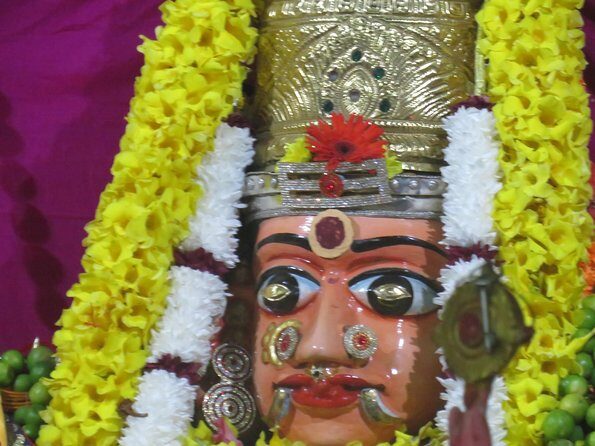
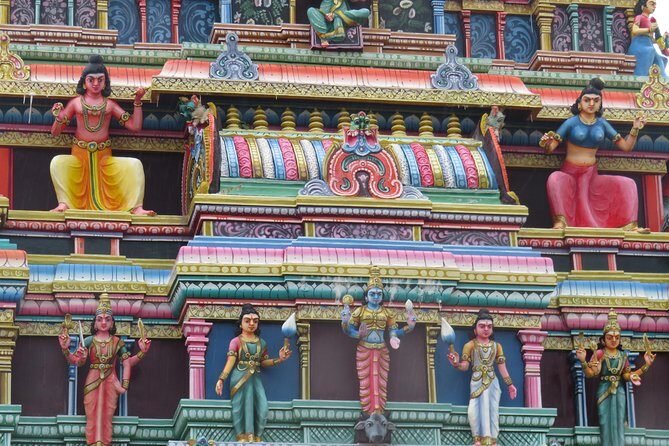
Next you move to Cap Malheureux for a first Tamil temple (a kovil) in the north of Mauritius. This stop is about 30 minutes, with free admission.
This is a helpful middle step. By now, you’ve got a sense of the festival rhythm and how stories connect to belief. Now the tour shifts into a Tamil lens—different phrasing, different emphases, and different ways of explaining the divine.
Tamil kovils are often where visitors realize they’ve been mixing up “Hinduism” as a single label. In practice, temple traditions reflect language, regional styles of devotion, and specific deity relationships. A kovil visit helps you see that Hindu spirituality in Mauritius isn’t one flat show; it’s layered and community-driven.
The guide’s job here is to make legends feel concrete. You’ll likely hear how myths are used to explain why a particular deity matters, why certain stories get repeated, and how community identity develops around worship sites.
Practical tip: since this stop is shorter, pay attention early in the talk. The meaning you pick up in the first few minutes is what you’ll remember when you’re looking at carvings, statues, or temple layout details later on your own.
Stop 3: Cap Malheureux Muruga statue, 15 meters, and the Batu Caves link
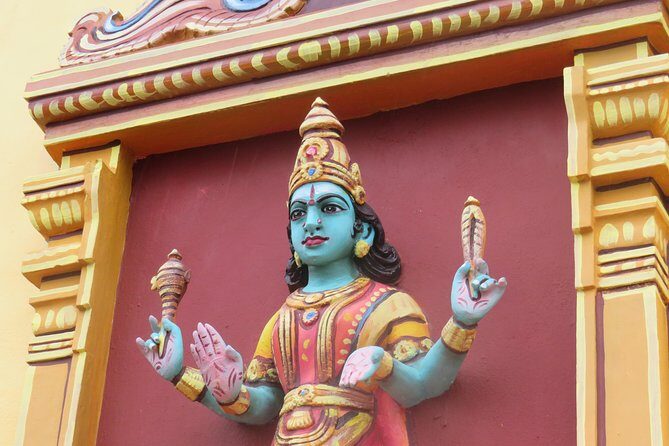
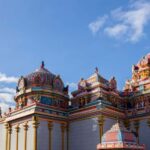
The final stop is also in Cap Malheureux, but it’s a second Tamil temple where you’ll see an impressive Muruga statue—15 meters high. This stop runs about 15 minutes and also has free admission.
It’s a short segment, so you want to go in ready to look. A statue of that scale grabs attention instantly, but the tour’s value is explaining why it’s meaningful and where the reference comes from. You’ll learn it’s a replica of the statue at the entrance of the Batu Caves in Kuala Lumpur.
That connection is more than “cool fact.” It shows how Indian spiritual geography travels. Mauritius doesn’t just import religion; it references, adapts, and builds local landmarks that echo what worshippers already know from elsewhere. It’s a living network of spiritual imagery across the Indian Ocean.
Potential drawback: the Muruga visit is the briefest stop. If you’re hoping for a long, slow photo session, this may feel rushed. But if you want symbolism and context more than time for lingering, it’s a good ending. You’ll likely leave with a clear mental picture and a couple of stories tied to it.
The big myth questions you’ll actually care about
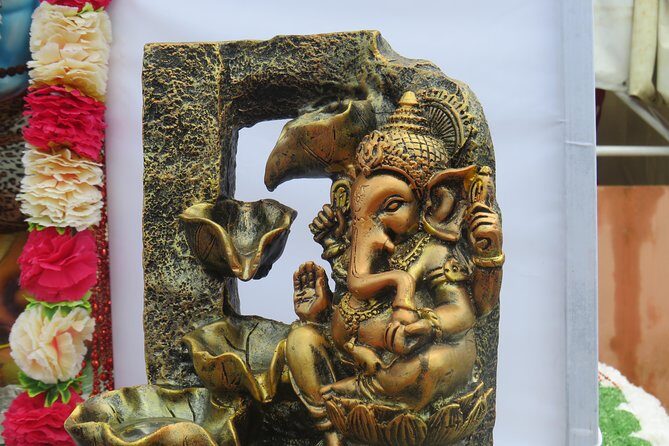
Part of what makes this tour strong is that it doesn’t stay at the surface level of “what is this deity.” The guide focuses on why certain features show up in worship and art. You may hear answers to questions like:
- Why Shiva has a blue neck
- Why a lingam is constantly watered
- Why Ganesh’s right defense is broken
These aren’t random trivia prompts. They’re entry points into how Hindu myth works as a moral and spiritual language. When you understand that myths often teach through visible symbols, the statues and ritual items start to feel less like decoration and more like a set of instructions for how to think and how to behave.
I also like that the tour frames Hindu spirituality in Mauritius with a wider story—Indian religions in a new place, under historical pressure, and then carried forward into present-day community life. That’s one reason the experience can feel both personal and educational at the same time.


Festivals you can connect to on the ground: Shivaratree, Cavadee, and more
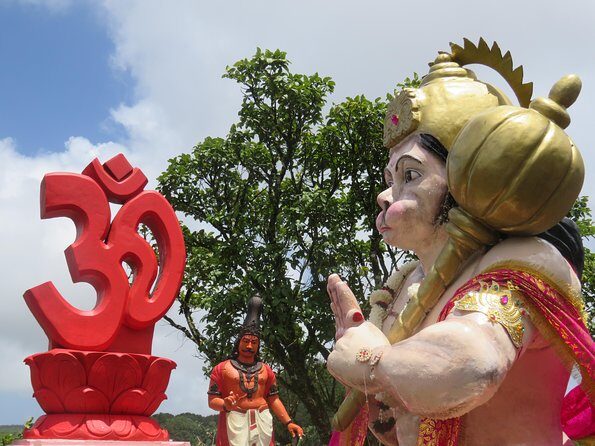
The route is festival-minded, even if you’re not visiting on a major festival day. You’ll hear about multiple celebrations such as Maha Shivaratree, Cavadee, Ganesh Chaturti, Ganga Snan, and Govinden.
What’s useful is that these aren’t listed as names only. The tour discusses what people celebrate and how Mauritian society responds to these events. You might hear questions framed like: are you looking at Hindu religion or Tamil religion, and what impact does that distinction have in daily life?
The best bonus is timing. The tour can propose to attend and follow processions or prayers on specific festival dates. That means your visit could be quieter temple learning on a regular day, or it could include movement, music, and communal rhythm if your dates line up.
If you’re planning your trip around spirituality, check your calendar first. A temple explanation is good any day. But a festival alignment can turn those explanations into something you can watch happen in real time.
Value for money: what $64.61 buys you in real insight
At $64.61 per person for about 3 hours, the price is not “cheap,” but it’s also not out of reach for a guided cultural experience in Mauritius. Here’s what you’re really paying for: not entry access (temple admissions are free for the stops), but guided interpretation—someone helping you connect symbols, myth, and history without you needing to research for weeks.
The value is strongest if you:
- want a guided explanation of deities and ritual logic
- prefer context over a quick temple drive-by
- like respectful storytelling that answers specific questions
The other value factor is the private setup. Even though the tour is short, you’re not stuck in a large group where questions get ignored.
One small consideration: because it’s a tight route with only three stops, if you prefer long unstructured wandering or you’re focused mainly on photos and architecture with minimal talk, you might feel like you’d rather spend the time independently.
Who should book this route of Indian spirituality
This is a great fit if you’re the kind of traveler who asks why people do what they do. If you enjoy symbolism, myths as meaning-systems, and the way communities preserve identity, you’ll click with the format.
It’s also a strong choice if you want a respectful introduction without getting lost in terminology. The tour’s whole style is built around making big topics understandable, including the religious and cultural questions tied to Mauritian history.
You might choose a different option if:
- you need a very long stop at each site for photography and silence
- you’re not interested in myth explanations and prefer only basic sightseeing
- you want a different spiritual focus (this one stays rooted in Indian/Hindu traditions)
Booking advice: when it’s worth it, and when to rethink it
Book it if you’re in the north around Grand Baie and you want a guided, story-based temple experience that connects Indian spiritual practice to Mauritian history. The stop sequence works: Triolet sets the festival anchor, Cap Malheureux temples widen the devotional angle, and the Muruga statue gives a powerful visual ending tied to a broader Indian Ocean reference point.
Rethink it if your schedule is too tight for a 9:00 am start, or if you’re traveling during uncertain weather. Since the tour requires good weather, plan a flexible day.
Finally, consider what you want from the trip. If you’re hoping to leave with a deeper mental map—what these symbols mean, why rituals look repetitive, and how festivals connect to identity—this tour delivers.
FAQ
How long is the Route of Indian Spirituality tour?
The tour lasts about 3 hours.
What is the price per person?
It costs $64.61 per person.
What time does the tour start?
The start time is 9:00 am.
Where do we meet for the tour?
The meeting point is La CroisetteMU, Chem. Vingt Pieds, Grand Baie 30517, Mauritius.
Is this tour private?
Yes. It is a private tour/activity, and only your group participates.
How do I get the ticket?
You receive a mobile ticket.
Are service animals allowed?
Yes, service animals are allowed.
Can I cancel for free?
Yes. Free cancellation is available up to 24 hours in advance of the experience start time.
Is the tour weather-dependent?
Yes. The experience requires good weather, and if it’s canceled due to poor weather you’ll be offered a different date or a full refund.
If you want temples with explanations that actually change how you look, this is a solid choice in Mauritius. You’ll leave with stories tied to Shiva, Muruga, Ganesh, and the festivals that keep these meanings alive.